The decision in Tokyo
Japan's surrender
Who decided
Six men ran Japan’s war: the Prime Minister, Admiral Kantaro Suzuki; the Foreign Minister, Shigenori Togo; the Army Minister, General Korechika Anami; the Navy Minister, Admiral Mitsumasa Yonai; and the two chiefs of staff, General Yoshijiro Umezu and Admiral Soemu Toyoda. Together they formed the Supreme Council for the Direction of the War, the Big Six. Sources: 10
The council could act only when all six agreed. Sources: 11
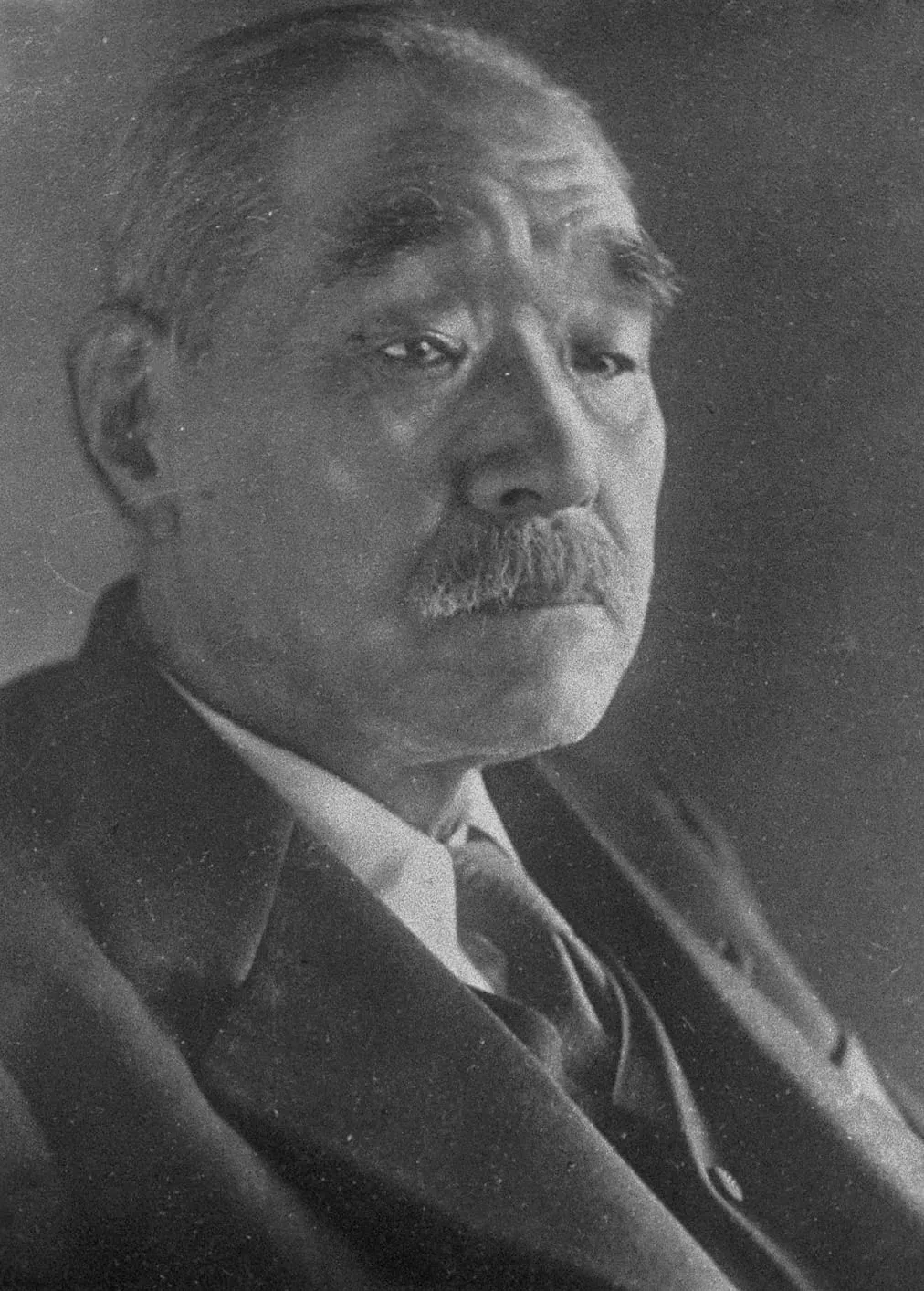
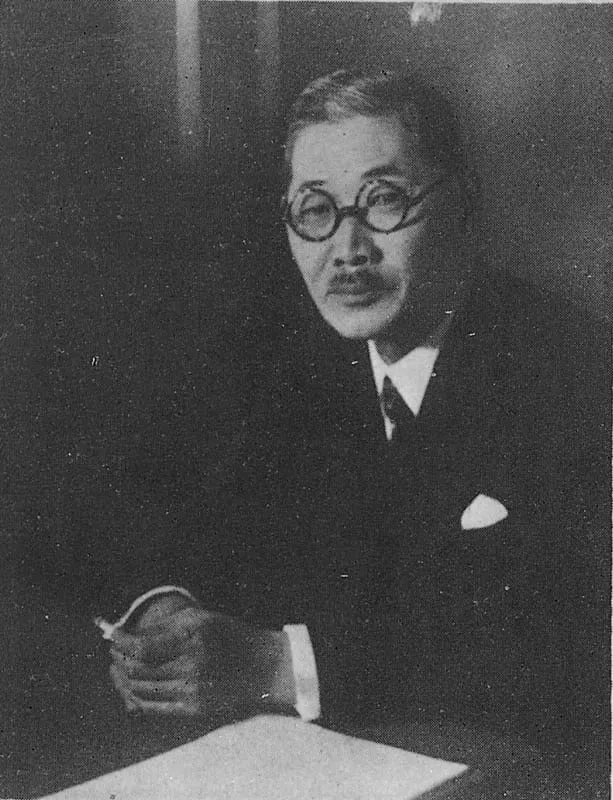
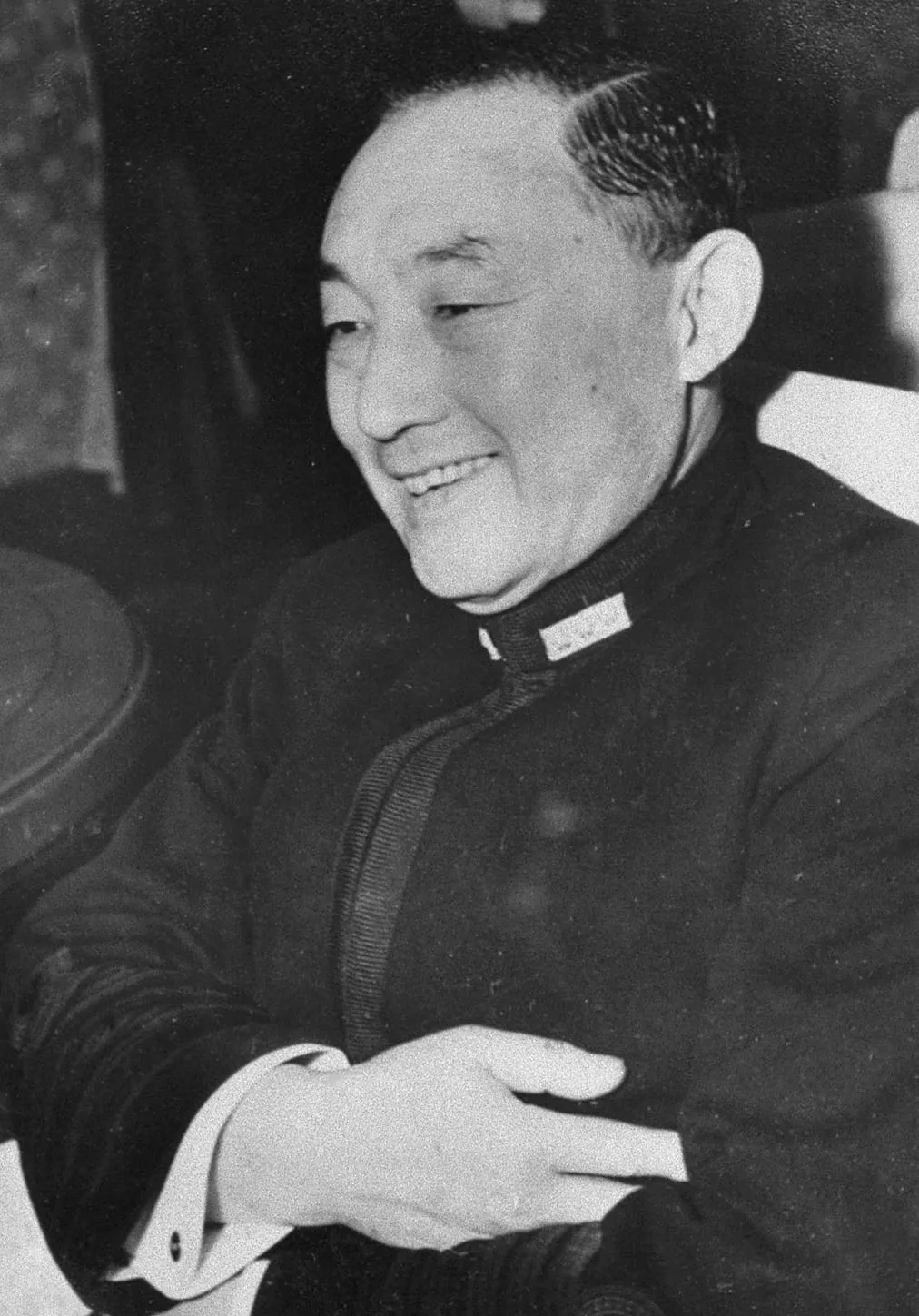
Beside them stood Marquis Koichi Kido, the Lord Keeper of the Privy Seal, the Emperor’s closest adviser. Sources: 12
On paper the Emperor held every power. The Meiji constitution made him head of the Empire and supreme commander of the Army and Navy, and gave him alone the right to make war and peace. It also said his ministers should advise him, and in practice he followed their advice. Sources: 2 10 13
The historian Richard Frank, reading Tsuyoshi Hasegawa, finds that only Togo was ready to give up the old order. The others, the Emperor among them, wanted to keep it, and disagreed only about how. Sources: 12
Silence at Potsdam
On 26 July the United States, Britain and China called on Japan to surrender, in the Potsdam Declaration. Two days later, at a press conference, Suzuki called the declaration a rehash of the Cairo Declaration and said the government would “ignore it entirely and resolutely fight”. Sources: 4 14
The word he used was mokusatsu. A Japanese dictionary of the time gives its meanings as to take no notice of, or to treat with silent contempt. Sources: 4 15
It is sometimes said that Suzuki meant only “no comment”, and that a mistranslation brought on the bombings. But Japan’s leaders had chosen to make no reply. Yonai said that day that whoever spoke first was at a disadvantage, so “There is no need to rush.” Sources: 12 15
Tokyo was still hoping that the Soviet Union would help it to a negotiated peace. Its cables to Moscow, read by American codebreakers, are on The decision and the debate. The Soviets had said they could give no answer until Stalin and Molotov came back from Potsdam. Sources: 1
Three days in August
Early on 7 August the Domei news agency in Tokyo picked up President Truman’s statement that the United States had attacked Hiroshima with an atomic bomb. The Army replied that it seemed to be not an atomic bomb but an extremely powerful conventional one, and wanted to wait for its own investigation. Sources: 16
On 8 August Togo reported to the Emperor in the underground room of the palace. In Togo’s account, the Emperor said they should make every effort to end the war as soon as possible. Sources: 16
That day a team of Army officers and the physicist Yoshio Nishina reached Hiroshima. Their meeting on 10 August concluded that the city had been destroyed by an atomic bomb. Sources: 17
The Soviet Union declared that it would be at war with Japan from 9 August, and its forces attacked in Manchuria. The news reached Tokyo at about 04:00 that morning. Sources: 10 18
The Big Six met that morning, and while they were meeting, news came of the bomb on Nagasaki. It did not break the deadlock. Sources: 1 10 11 16
Suzuki, Togo and Yonai would accept the Potsdam terms with one condition, that the Imperial House be kept. Anami, Umezu and Toyoda wanted three more: that Japan disarm its own forces, try its own war criminals, and not be occupied. Sources: 1 2
The cabinet met through the afternoon and into the evening, and could not agree either. Sources: 1 10
The first decision
Just before midnight on 9 August, the Big Six met again with the Emperor in an air raid shelter at the palace. Sources: 1 2 12
Togo’s draft asked only that the Emperor’s status under Japan’s laws be kept. Kiichiro Hiranuma, the President of the Privy Council, objected that the Emperor’s powers did not come from any law. The words that went out asked instead that the Allies make no demand which prejudiced “the prerogatives of His Majesty as a sovereign ruler”. Sources: 2
The council was still split three to three. No vote was taken. Suzuki stood, walked before the Emperor, and said they had “no choice but to ask for the seidan”, the sacred decision. Sources: 2
The Emperor said: “I have the same opinion as the Foreign Minister has.” He spoke of defences that were not ready and weapons that had run out, and said that he “should bear the unbearable”. By the record of the navy officer Zenshiro Hoshina, who was there, it was 02:30 on 10 August. Sources: 1 2
The offer went out at 07:00 through Switzerland and Sweden. Japan would accept the Potsdam terms “with the understanding that the said declaration does not comprise any demand which prejudices the prerogatives of His Majesty as a Sovereign Ruler.” Sources: 2 5
Subject to the Supreme Commander
The American answer, sent by the Secretary of State, James Byrnes, and dated 11 August in Washington, said that from the moment of surrender the Emperor’s authority “shall be subject to the Supreme Commander of the Allied powers”, and Japan’s form of government would be settled by “the freely expressed will of the Japanese people”. Sources: 19
Tokyo heard it on American radio at about 04:00 on 12 August, and received it officially at about 07:00 on the 13th, which is why Japanese accounts date it later than American ones. Sources: 1 20
Umezu and Toyoda asked the Emperor to reject it, fearing that the reply placed him in a subordinate position. On 13 August the Big Six and then the cabinet argued all day, and the cabinet broke up without a decision. Sources: 1 20 21
Yonai, by contrast, told his confidant Admiral Takagi on 12 August that the atomic bombs and the Soviet entry into the war were “in a sense, God’s gifts”, because they let Japan end the war without having to say that the state of the country at home forced it to. Sources: 22
Then B-29s dropped leaflets over Japan printing Japan’s offer and the American reply. For most Japanese it was the first they knew of the talks. Sources: 10 23
The second decision
On the morning of 14 August the council and the cabinet met before the Emperor. When the opponents had spoken, at about 11:00, he told them his mind had not changed. “If we continue the war, the result will be that our homeland will be reduced to ashes,” he said. Sources: 1 3
He offered to speak to the nation himself: “I will stand in front of the microphone at any time.” Sources: 3
The Imperial Rescript ending the war was issued that day. Late that night the Emperor recorded it, twice, for broadcast the next day. Sources: 6 10 24
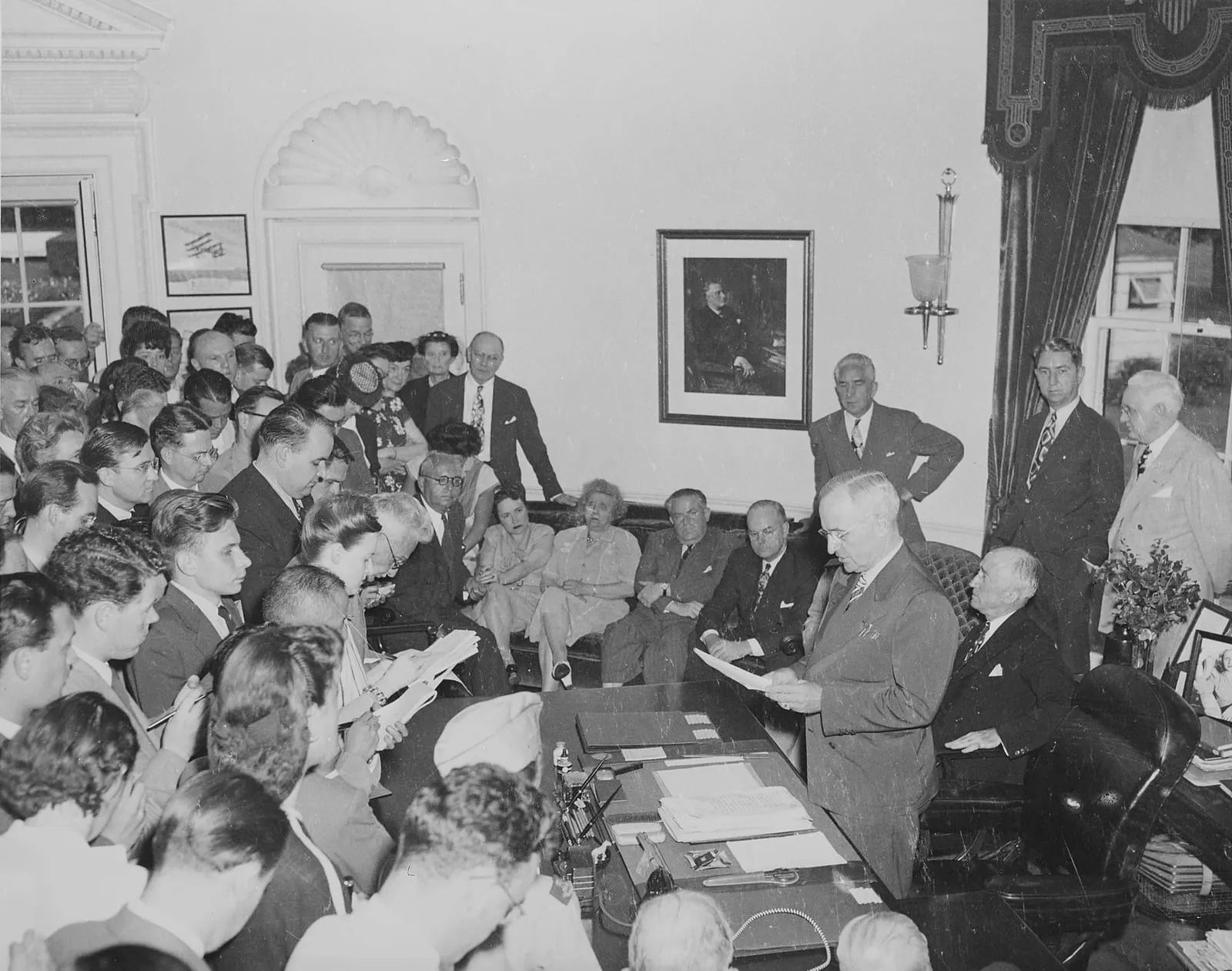
Japan’s acceptance was handed over in Bern that evening, and at 19:00 Washington time, 08:00 on 15 August in Tokyo, Truman announced it. Sources: 25 26 27
The night of 14 August
That night a group of army officers led by Major Kenji Hatanaka tried to stop the surrender. They got into the palace grounds, and Hatanaka shot dead General Takeshi Mori, commander of the palace guard. Sources: 10 24
They searched for the recordings, but the palace officials who knew where they were would not say. The search was slowed when Tokyo was blacked out for the last B-29 raid of the war. By about 08:00 the attempt had collapsed, because key army units would not join it. Sources: 10 24
Richard Frank calls it “extremely melodramatic” but with little real chance of success. Sources: 11
Anami, who had argued against surrender to the end but never brought the government down, took his own life on the morning of 15 August. Sources: 1 10 23
The broadcast
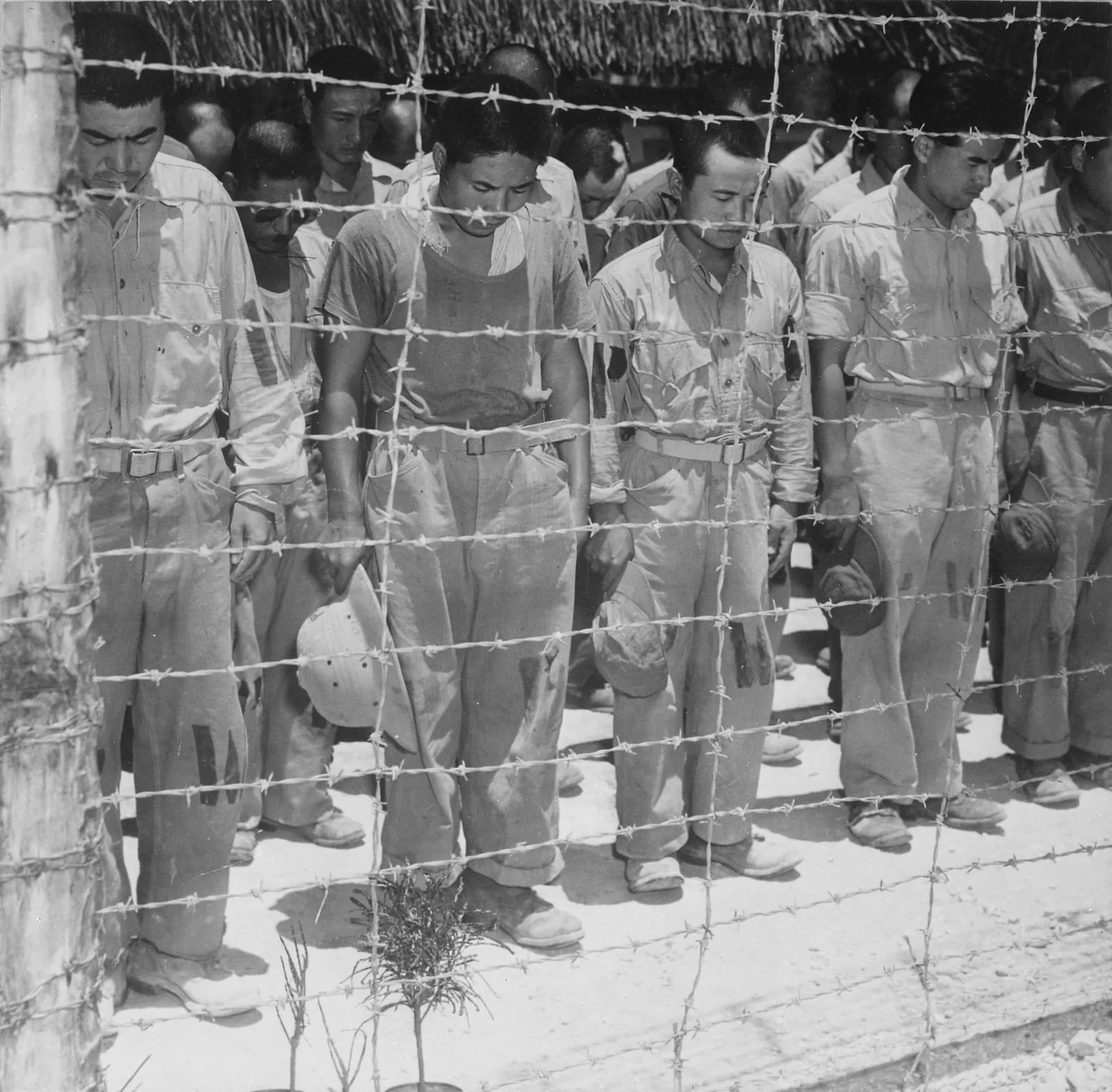
At noon on 15 August the Emperor’s recorded voice was broadcast to the nation. For most Japanese it was the first time they had heard it, and the recording was poor and the court language old, so many did not understand what he was saying. Sources: 6 10 24
The rescript never used the word surrender. It said the war had “developed not necessarily to Japan’s advantage”, and that “the enemy has begun to employ a new and most cruel bomb, the power of which to damage is indeed incalculable, taking the toll of many innocent lives.” Sources: 7 28
Japan, it said, would pave the way for peace “by enduring the unendurable and suffering what is insufferable.” Sources: 7
After the broadcast
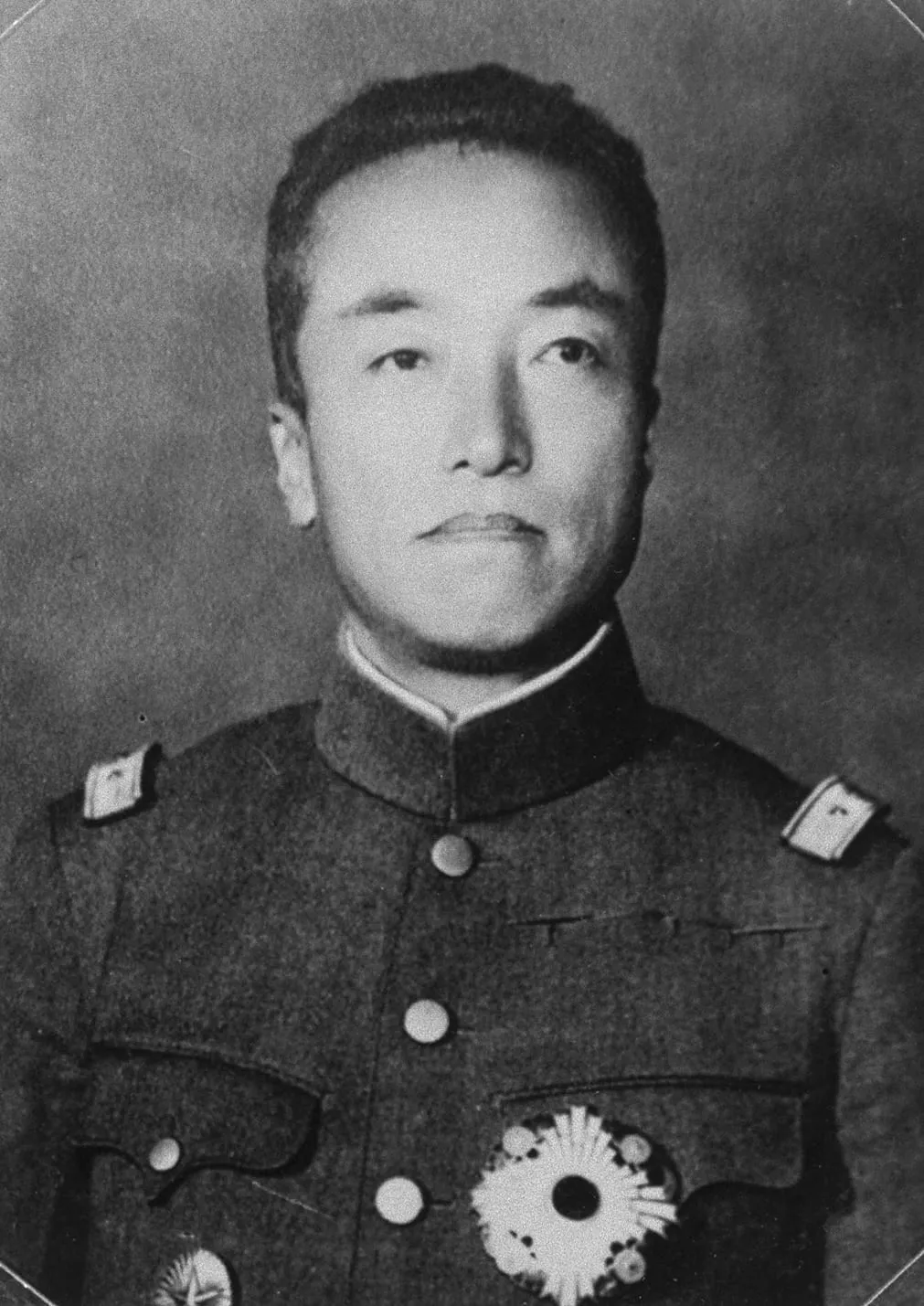
Suzuki’s cabinet resigned that day. On 17 August Prince Naruhiko Higashikuni formed a new cabinet, the first headed by a member of the imperial family. Sources: 29 30
Imperial Headquarters ordered all forces to stop fighting on 16 August. Some commanders overseas at first refused, and it took the Emperor’s personal emissaries to persuade them. Sources: 11 29
The war with the Soviet Union went on. Soviet troops landed on Shumshu in the northern Kurils on 18 August, the Kwantung Army in Manchuria signed its surrender on 19 August, and fighting on Sakhalin went on for days afterwards. Between 28 August and 5 September Soviet forces occupied the four islands that Japan still claims as its Northern Territories. Sources: 31 32
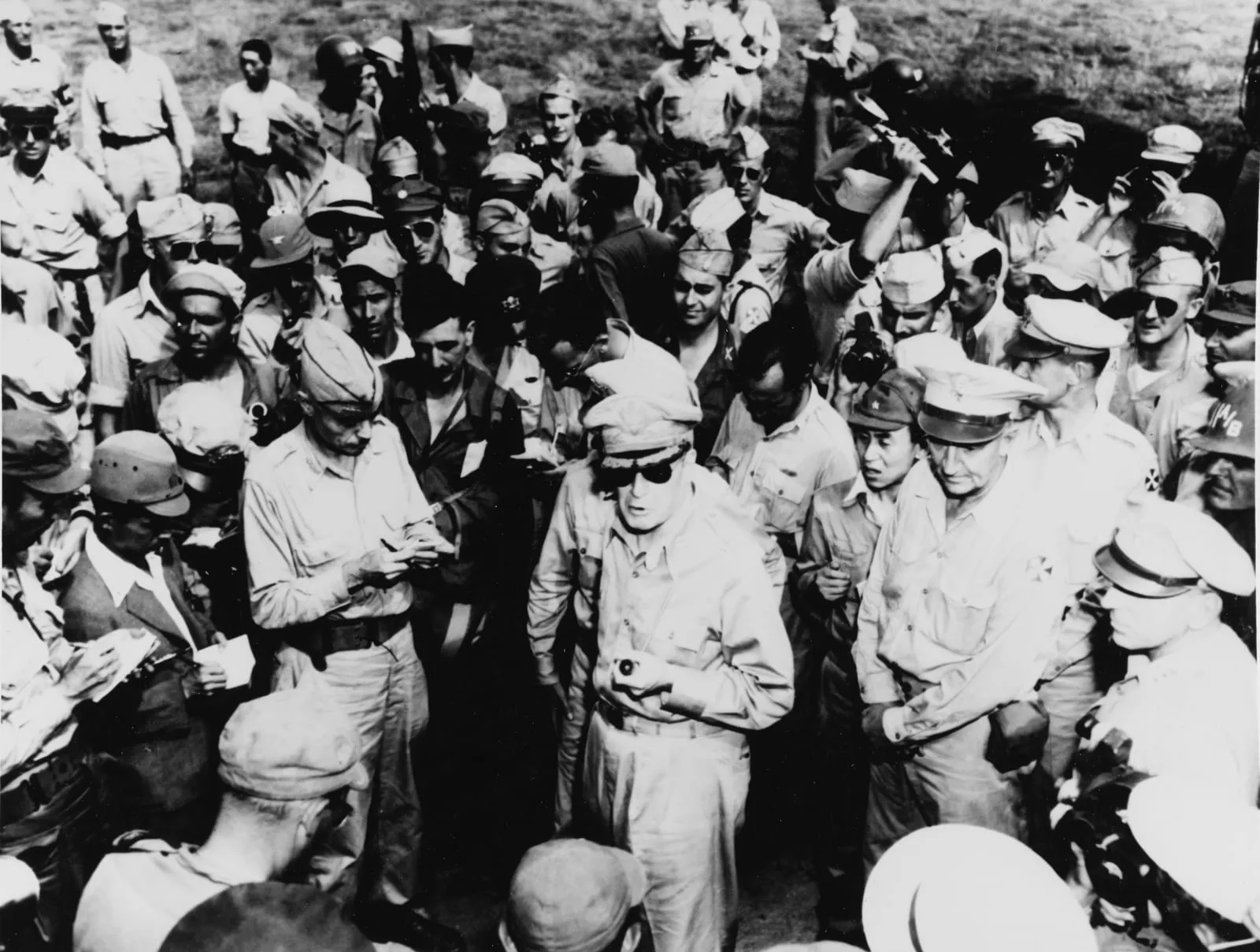
On 19 August a Japanese delegation flew to Manila in two white-painted bombers. There were no negotiations: it was given orders for the surrender and the occupation. On 30 August General Douglas MacArthur, the Supreme Commander, landed at Atsugi airfield near Tokyo. Sources: 10 33
Aboard USS Missouri
On 2 September 1945, in Tokyo Bay, Mamoru Shigemitsu, the new Foreign Minister, signed the Instrument of Surrender for the Emperor and the government, and Umezu signed for Imperial General Headquarters. The time was recorded as 09:04. The photograph of Shigemitsu signing is on The cost. Sources: 8 9 10
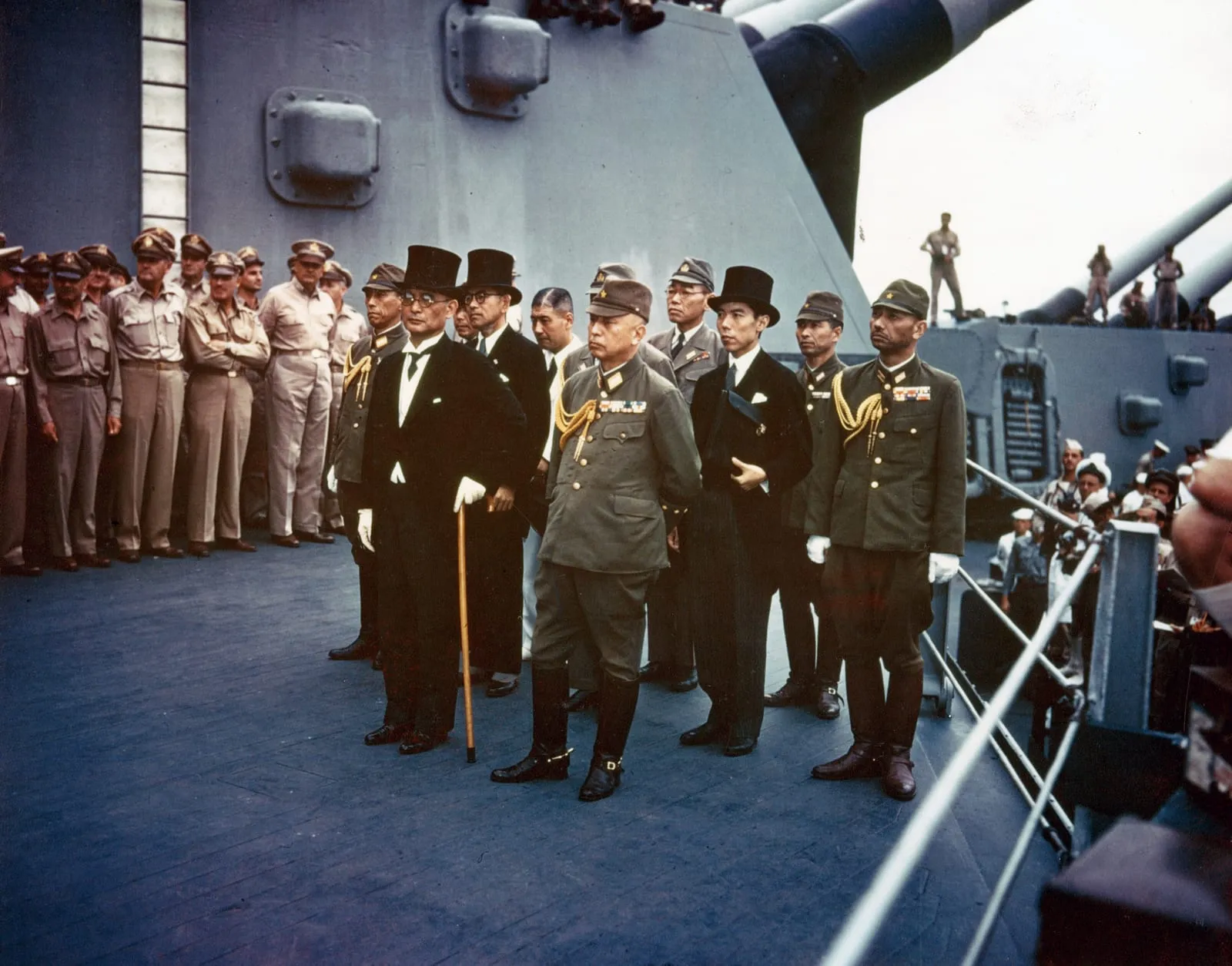
The Instrument repeated the words of the Byrnes reply: the Emperor’s authority would be “subject to the Supreme Commander for the Allied Powers”. Sources: 8
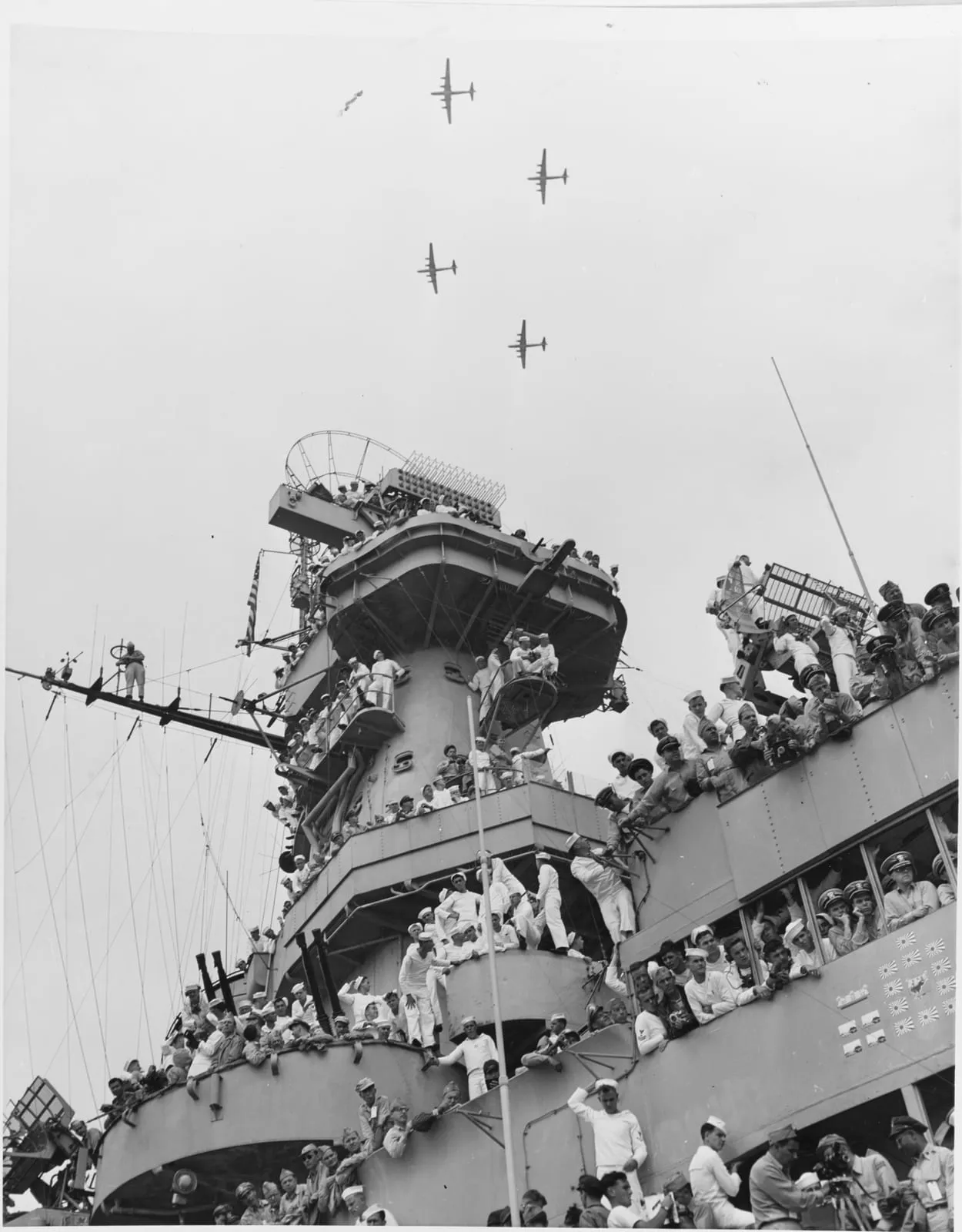
As the Japanese left the ship, some 450 carrier aircraft and 600 B-29s flew over the fleet. Sources: 10
How historians see the Emperor
Historians still argue about the Emperor’s part. Herbert Bix holds that “only the emperor had the sovereign power to resolve the issue”, that he held back through June and July, and that the story of a heroic intervention for peace was shaped afterwards. Sources: 28
Frank finds Bix convincing that the Emperor was much more than a figurehead, but thinks Bix’s picture of a “fighting generalissimo” goes too far. Hasegawa argues that the crisis led the Emperor to act himself, and that he wanted more than Togo was ready to settle for. Sources: 12
Whether the bombs or the Soviet Union’s entry into the war weighed more with Japan’s leaders is argued on The cost and The decision and the debate. This site does not choose between them.