8 of 8 The cost

Where the two journeys led

The cost

This page is about the people the two bombs killed and injured, and those who survived. It also sets out how the war ended, and what historians still argue about. Every count of the dead is an estimate, so the figures here are given as ranges, with each source named.

The toll
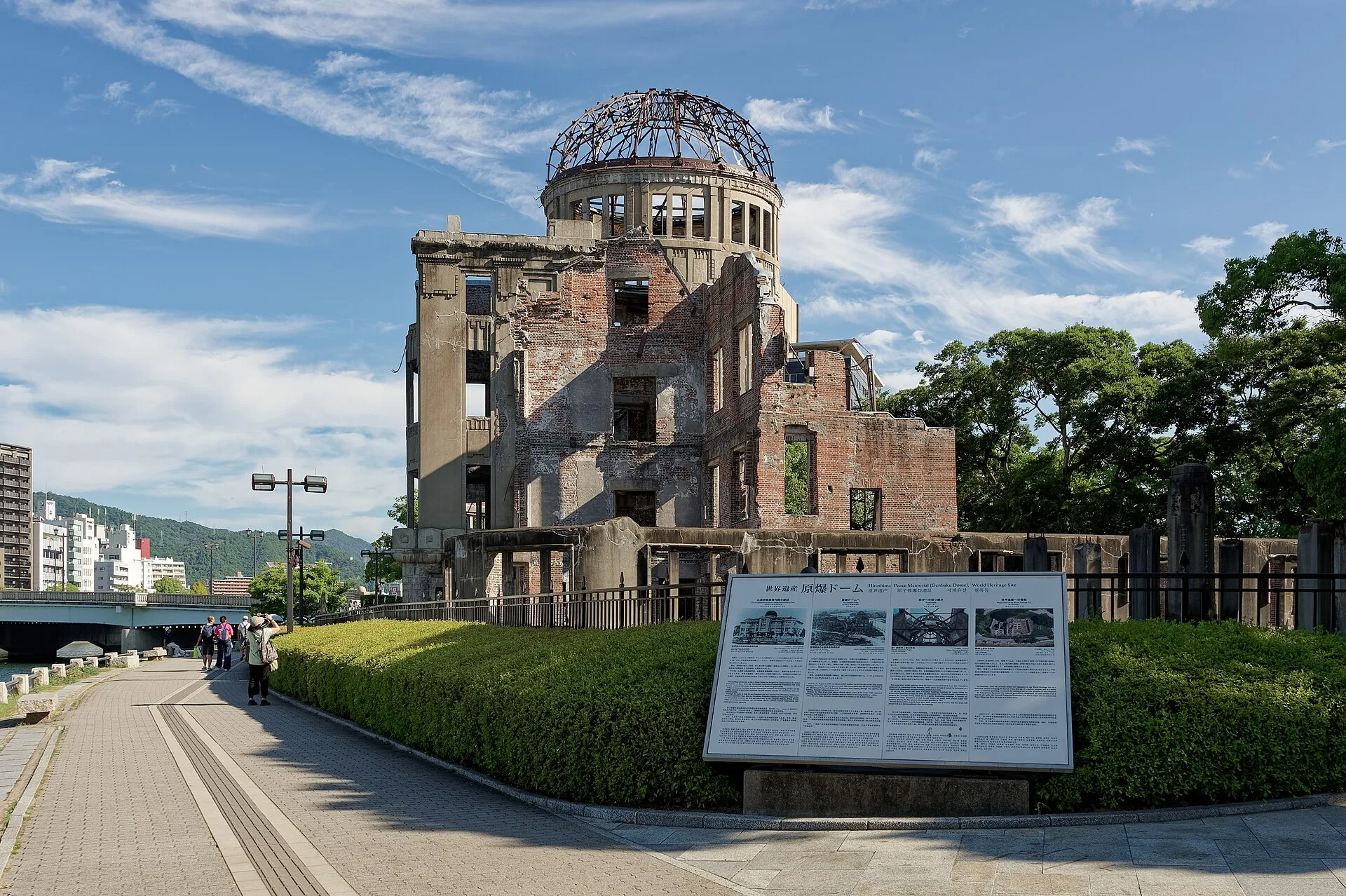
The Atomic Bomb Dome in Hiroshima, a ruined building with a bare domed frame, seen from the path beside it on a clear day.
The Atomic Bomb Dome, Hiroshima, in August 2024. Jakub Hałun, CC BY 4.0, source

No one knows exactly how many people the bombs killed. Different bodies counted at different times, over different periods, and their figures are set out side by side here.

Hiroshima

6 August 1945

90,000 to 166,000

deaths within two to four months, as estimated by the Radiation Effects Research Foundation (RERF) Sources: 10 11 12

City of Hiroshima
About 140,000 by the end of December 1945 Sources: 11
US survey, 1946
70,000 to 80,000 killed or missing Sources: 13
Manhattan Project, 1946
66,000 dead Sources: 14
In the city that day
About 350,000 people Sources: 10 11

Nagasaki

9 August 1945

60,000 to 80,000

deaths within two to four months, as estimated by RERF

Nagasaki City
73,884 dead and 74,909 injured by the end of December 1945, in a report of July 1950 Sources: 12
US survey, 1946
More than 35,000 dead Sources: 13
Manhattan Project, 1946
39,000 dead Sources: 14
Living in the city
About 240,000 people Sources: 12

The exact number of dead will never be known. Records were destroyed, and in some families no one was left to report a death. Soldiers, conscripted workers and people in the city for the day were on no list of residents. The first American counts used lower population figures and shorter periods. Sources: 10 13

Most of the people killed were civilians. The dead included thousands of Koreans and a small number of Allied prisoners of war. Sources: 1 10 11 15 16 17

In Hiroshima, a city survey in 1946 counted 76,327 buildings. Of these, 51,787 were destroyed or burnt out and 6,180 were partly destroyed: nine in ten were damaged. Fire swept about 13 square kilometres. Sources: 1 13 18 19
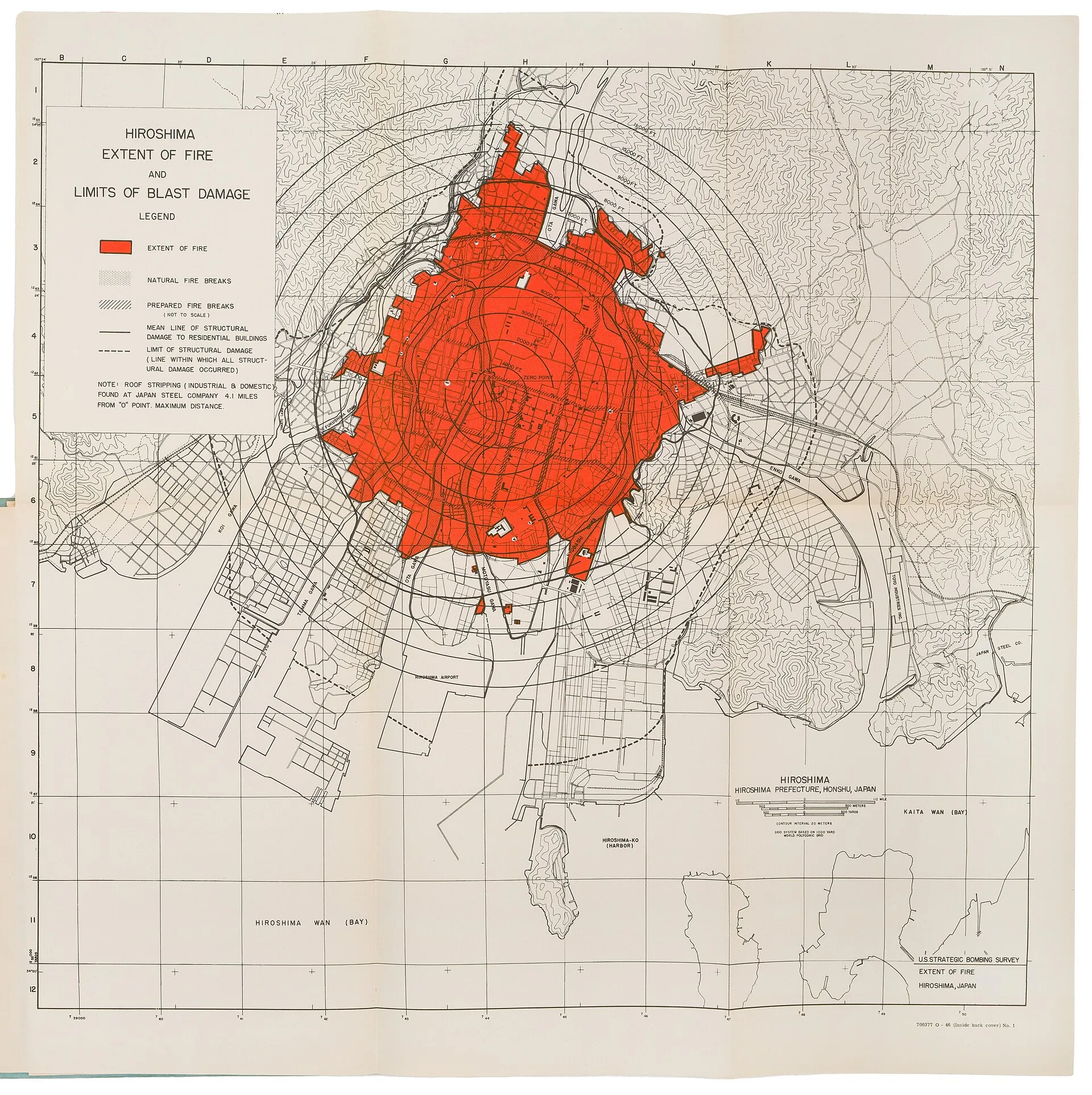
A 1946 US map of Hiroshima with the area of damage shaded red.
The extent of the damage in Hiroshima, mapped by the US Strategic Bombing Survey in 1946. US Strategic Bombing Survey, Government Printing Office, Public domain (US government), source

Nagasaki lies in steep valleys, and the hills held in the worst of the damage. Even so, 18,409 houses were damaged, about 36 per cent of the houses in the city. Sources: 12 13
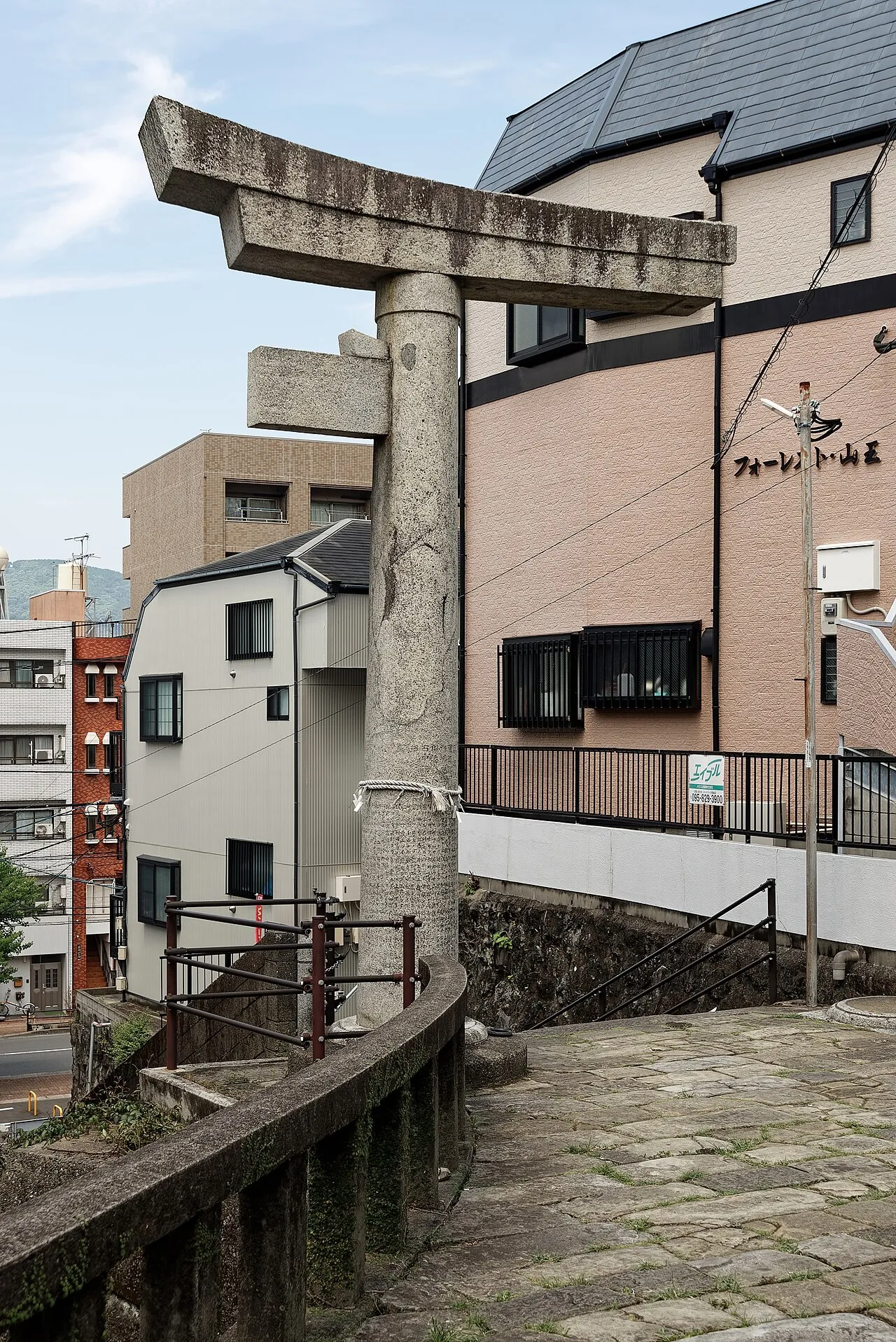
A stone shrine gateway in Nagasaki standing on one leg, its other side missing.
The one-legged torii of Sannō shrine, Nagasaki, in August 2024. Jakub Hałun, CC BY 4.0, source

How people died

The bombs killed in three ways: heat, blast and radiation. Fires then spread through the wreckage. Sources: 18

Near the hypocentre in Hiroshima the ground reached 3,000 to 4,000 degrees Celsius. Bare skin was burned as far as 3.5 kilometres away. Within 2 kilometres, most wooden houses fell and the area burned. Sources: 18

Within 1.2 kilometres of the hypocentre, about half the people died that day. Sources: 11

Many people who seemed unhurt fell ill within days or weeks, and many of them died. Radiation also harmed people who came into the city afterwards, to search for family or to help. Sources: 18

In 1946 American investigators estimated that burns caused 20 to 30 per cent of deaths, other injuries 50 to 60 per cent, and radiation sickness 15 to 20 per cent. These were estimates made from incomplete records. Sources: 13

After the bombing a black rain fell on areas around Hiroshima. For decades people caught in it outside an officially drawn zone were not recognised as survivors. After a court ruling in July 2021, people exposed to the black rain who have one of 11 listed illnesses can be certified, since April 2022. Sources: 20 21

The survivors

The survivors are called hibakusha, which means atomic bomb affected people. Sources: 22

Japan’s first law for survivors came into force in April 1957, giving them health checks and medical care. A second law followed in 1968. The present Atomic Bomb Survivors’ Support Law came into force in July 1995. Sources: 7

Four groups can hold a survivor’s health certificate: Sources: 21

  • people who were in or near the cities when the bombs fell
  • people who went within about 2 kilometres of a hypocentre in the two weeks after
  • people exposed in other ways, such as those who cared for the injured and the dead
  • babies who were then in the womb of someone in these groups

At the end of March 2026, 91,105 people held a certificate. Their average age was 86.66. Sources: 9 The number peaked at 372,264 at the end of the 1980 financial year. Sources: 23

Many survivors met prejudice. Some were turned down for jobs or for marriage, out of fear of illness or of harm to their children. Sources: 22 24

Tens of thousands of Koreans were in Hiroshima, many brought to Japan as labourers. No reliable count of Korean deaths exists. A memorial to the Korean victims was moved into the Peace Park in 1999. Sources: 25

For years the support laws did not reach survivors who lived abroad. Since December 2008 they can apply from overseas. In March 2026 about 2,061 certificate holders lived outside Japan, most of them in Korea and the Americas. Sources: 7 24 26

Long-term health

Since 1950 the Life Span Study has followed about 120,000 people: about 94,000 survivors and 27,000 people who were not in the cities. It is run by the Radiation Effects Research Foundation, a Japanese and American body. Sources: 10 27

Leukaemia came first. Among study members with a measurable dose, 204 died of leukaemia between 1950 and 2000. RERF estimates that 94 of those deaths, 46 per cent, were caused by the bombs’ radiation. The excess peaked after six to eight years. Sources: 28

Other cancers came later. From 1958 to 1998, 7,851 solid cancers were found among 44,635 study members with a measurable dose. RERF puts 848 of them, 10.7 per cent, down to radiation. Sources: 29 The extra leukaemia has now virtually disappeared, but the extra risk of other cancers remains. Sources: 10

Babies exposed in the womb, especially 8 to 15 weeks after conception, were more likely to have a severe mental disability and to be shorter as adults. Sources: 30

RERF has studied tens of thousands of survivors’ children. It has found no evidence of clinical or subclinical effects so far. It adds that this does not necessarily mean that no effects exist. Sources: 10 31

How the war ended

The bombs fell in the last weeks of the war. These are the steps by which Japan surrendered, in local time.

  1. 26 July

    The Potsdam Declaration

    The leaders of the United States, Britain and China call on Japan’s armed forces to surrender without conditions, or face “prompt and utter destruction”. The declaration says nothing about the Emperor.Sources: 32 33 34

  2. 28 July

    Japan’s answer

    Prime Minister Suzuki tells the press that Japan will ignore the declaration. The Allies take his word, mokusatsu, as a rejection.Sources: 35 36

  3. 6 August

    Hiroshima

    Little Boy is dropped on Hiroshima.Sources: 1 2

  4. 8 August

    The Soviet Union declares war

    Soviet forces invade Manchuria the next day.Sources: 2 34 36

  5. 9 August

    Nagasaki, and a divided council

    Japan’s war council learns of Nagasaki during the meeting and cannot agree. At an Imperial conference that night the council is still split three to three, and the Emperor backs accepting with one condition.Sources: 2 3 34 37 38

  6. 10 August

    The offer

    Japan offers to accept, provided the declaration does not prejudice “the prerogatives of His Majesty as a sovereign ruler”.Sources: 34 36

  7. 11 August

    The reply

    The American reply, for the Allies, says the Emperor’s authority will be “subject to the Supreme Commander”, and Japan’s government will be set by “the freely expressed will of the Japanese people”.Sources: 2 34

  8. 14 August

    The decision

    At a second Imperial conference the Emperor tells his ministers to accept, and that night he records a message to the nation. Army officers led by Major Kenji Hatanaka try to stop it. They fail, and the War Minister, Korechika Anami, takes his own life the next morning. At 19:00 Washington time, Truman announces that Japan has accepted.Sources: 5 34 36 37 38 39 40

  9. 15 August

    The broadcast

    At noon Tokyo time the Emperor’s recorded voice is broadcast to the nation. He speaks of “a new and most cruel bomb”, and does not use the word surrender.Sources: 4 5 37

  10. 2 September

    The signing

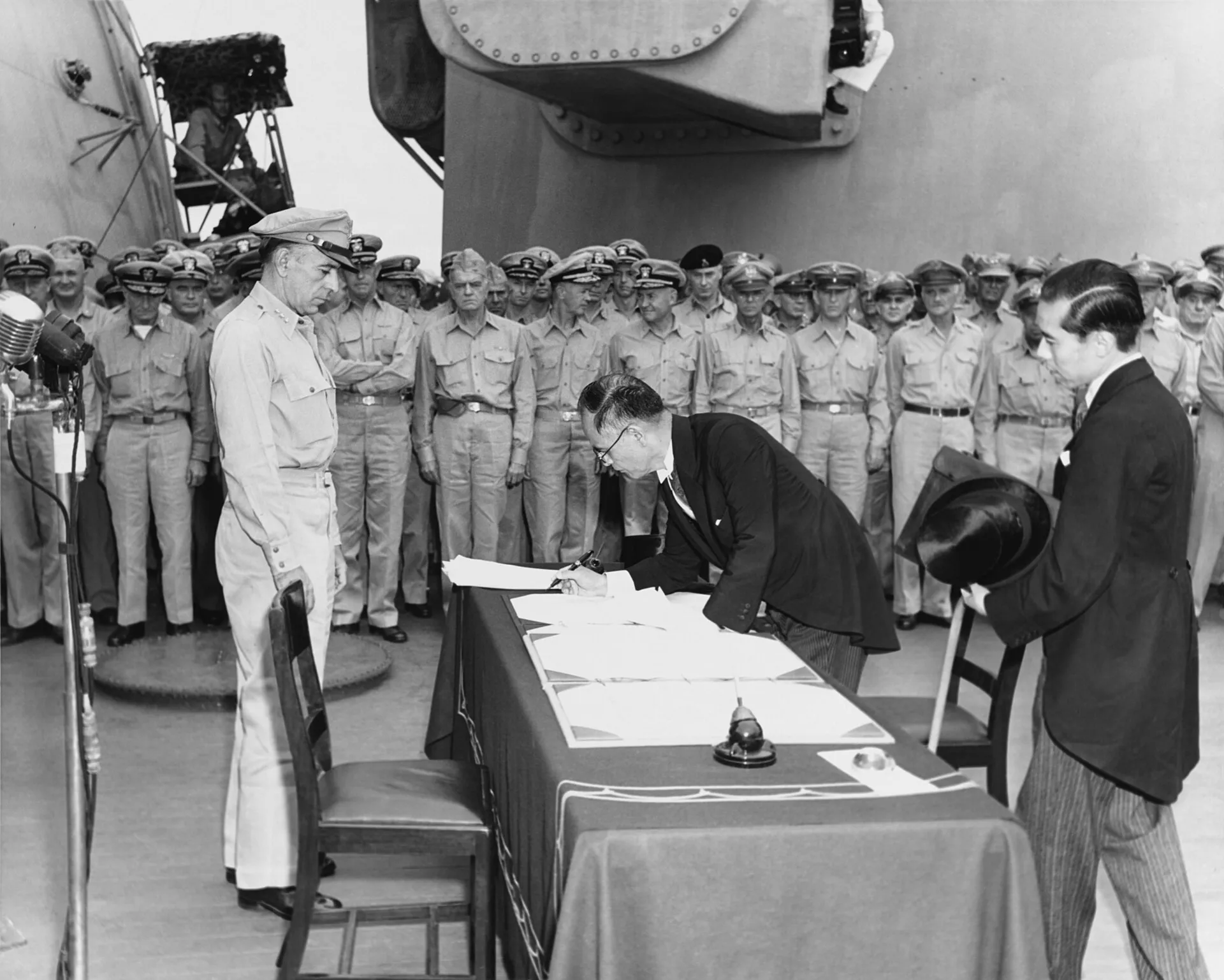
    Aboard USS Missouri in Tokyo Bay, Mamoru Shigemitsu and Yoshijiro Umezu sign for Japan. MacArthur accepts for the Allies, and Nimitz signs for the United States.Sources: 6 41

Japan’s foreign minister, Mamoru Shigemitsu, signs a document at a table on the deck of USS Missouri, watched by rows of officers.
Mamoru Shigemitsu signs the Instrument of Surrender aboard USS Missouri in Tokyo Bay, 2 September 1945. Lt. Stephen E. Korpanty, US Army Signal Corps, Public domain (US government), source

The debate

Whether the bombs were needed to end the war is still debated by historians. This page sets out the main positions in brief, and The decision and the debate sets them out in full, with the papers behind them. Neither takes a side. Sources: 42 43

The traditional view was set out by the former Secretary of War, Henry Stimson, in 1947. It holds that the bombs ended the war quickly and spared the far greater loss of life an invasion would have caused. Sources: 34 44

Revisionist historians, led by Gar Alperovitz, argue that Japan was close to surrender and that other paths were open, such as waiting for the Soviet Union to join the war, or assuring Japan it could keep its Emperor. Sources: 34 44

Many historians sit between the two. Barton Bernstein judged it “very likely, though certainly not definite” that the war would have ended before an invasion without the bomb. Sources: 34 44

What made Japan give in?

Tsuyoshi Hasegawa argues that the Soviet declaration of war weighed more than the bombs. Richard Frank and Sadao Asada give the bombs more weight, and call Soviet entry significant but not decisive. Sources: 34 44

What would an invasion have cost?

In June 1945 Marshall’s planners expected about 31,000 American casualties in the first 30 days of an invasion of Kyushu. Truman later spoke of a quarter of a million American lives, and in his memoirs of half a million. Sources: 34 44 45

Could Japan have been warned?

On 31 May 1945 the Interim Committee, which advised on the bomb, decided against a demonstration. Some scientists argued for one in the Franck Report. Joseph Grew and Stimson wanted to tell Japan it could keep its Emperor; James Byrnes opposed it. Sources: 34 43

Was Japan about to surrender anyway?

In 1946 the US Strategic Bombing Survey concluded that Japan would have surrendered without the bombs, Soviet entry or an invasion, “certainly prior to 31 December 1945, and in all probability prior to 1 November 1945”. Several historians question the evidence behind that finding. Sources: 34 46

Was the bomb aimed at Moscow?

Alperovitz argues that impressing the Soviet Union was a main aim. Martin Sherwin sees it as a welcome extra rather than the reason. Gabriel Kolko and Robert Maddox reject the idea. Sources: 34

Remembering

Each year on 6 August Hiroshima holds its Peace Memorial Ceremony, with a minute’s silence from 8:15, the moment of the bombing. On 9 August Nagasaki falls silent at 11:02. Sources: 47 48

In Japan, 15 August is the Day to Commemorate the War Dead and Pray for Peace. A national ceremony remembers more than three million Japanese war dead, with a silence at noon. Sources: 49
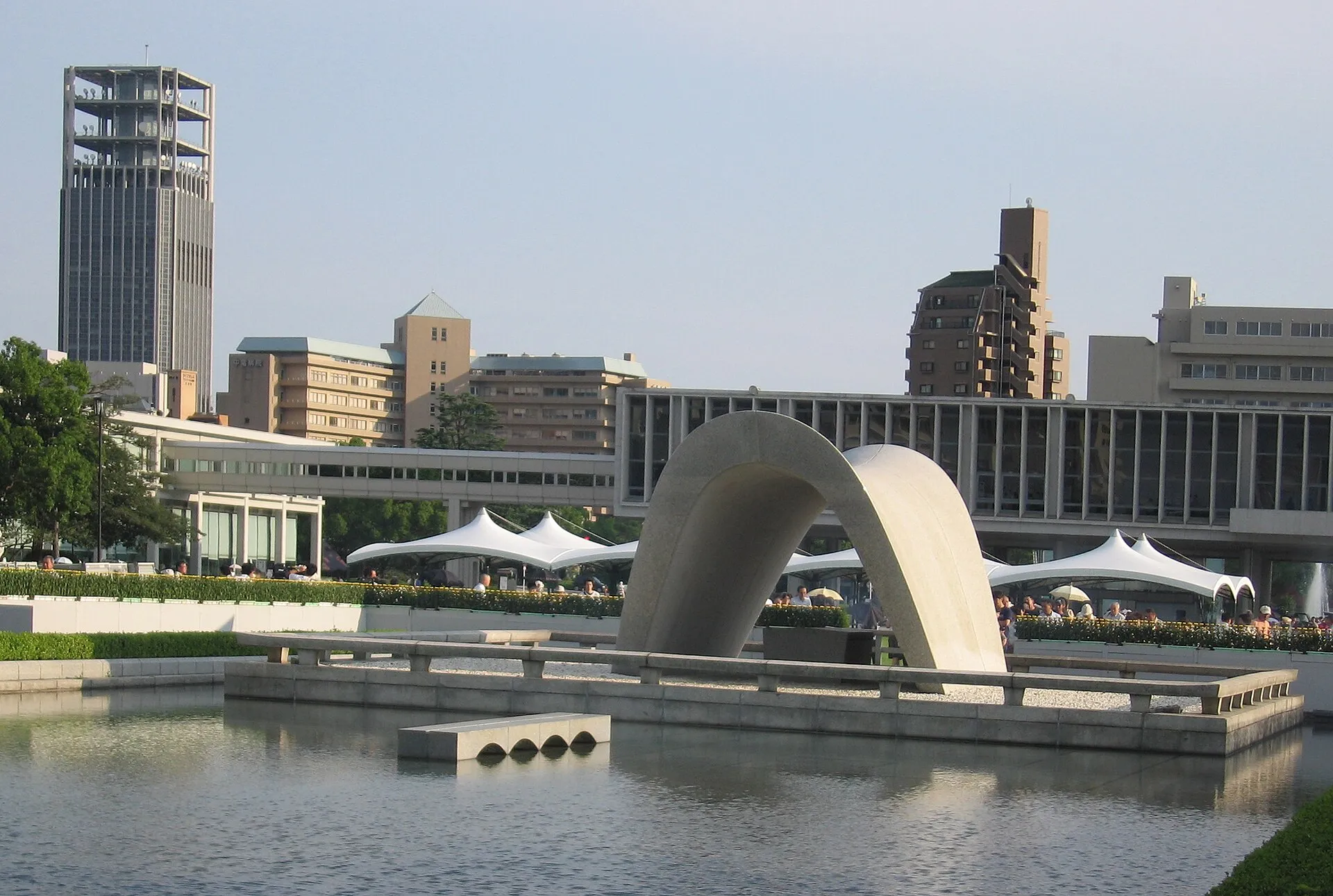
The arched stone cenotaph in Hiroshima’s Peace Memorial Park, seen across its pool on a sunny day, with the museum and city buildings behind.
The cenotaph in Hiroshima’s Peace Memorial Park. The stone chest beneath the arch holds the register of the dead. Netherzone, CC BY-SA 4.0, source

Hiroshima’s cenotaph was designed by Kenzo Tange and completed on 6 August 1952. Its stone chest holds the register of the dead, of any nationality. The inscription reads: “Let all the souls here rest in peace; for we shall not repeat the evil.” Sources: 50

In August 2026 the Hiroshima register held 353,639 names, and Nagasaki’s held 204,708. Both list survivors who died at any time since, so they are not counts of the people the bombs killed. Sources: 51 52
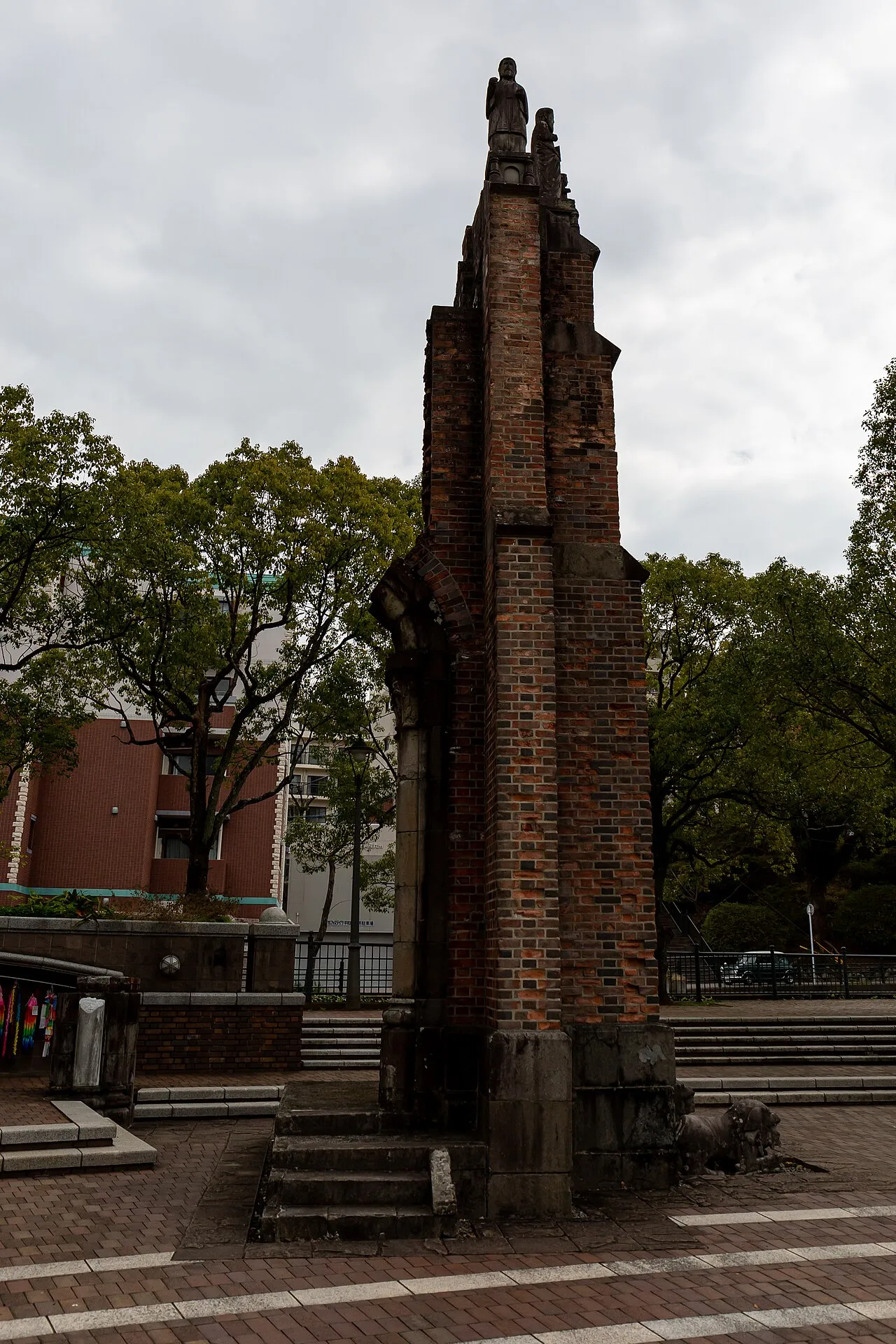
A tall fragment of ruined brick wall standing among trees near the hypocentre in Nagasaki.
Ruins kept near the hypocentre in Nagasaki, in 2019. Balon Greyjoy, CC0, source

Sadako Sasaki was two when the bomb fell on Hiroshima. Ten years later she was found to have leukaemia. In hospital she folded paper cranes, hoping to live, and by the end of August 1955 she had folded more than 1,000. She died on 25 October 1955, aged 12. Sources: 53

Her classmates raised money across Japan for a monument to all the children who died. The Children’s Peace Monument was unveiled on 5 May 1958. About 10 million paper cranes are sent to it each year. Sources: 54 55
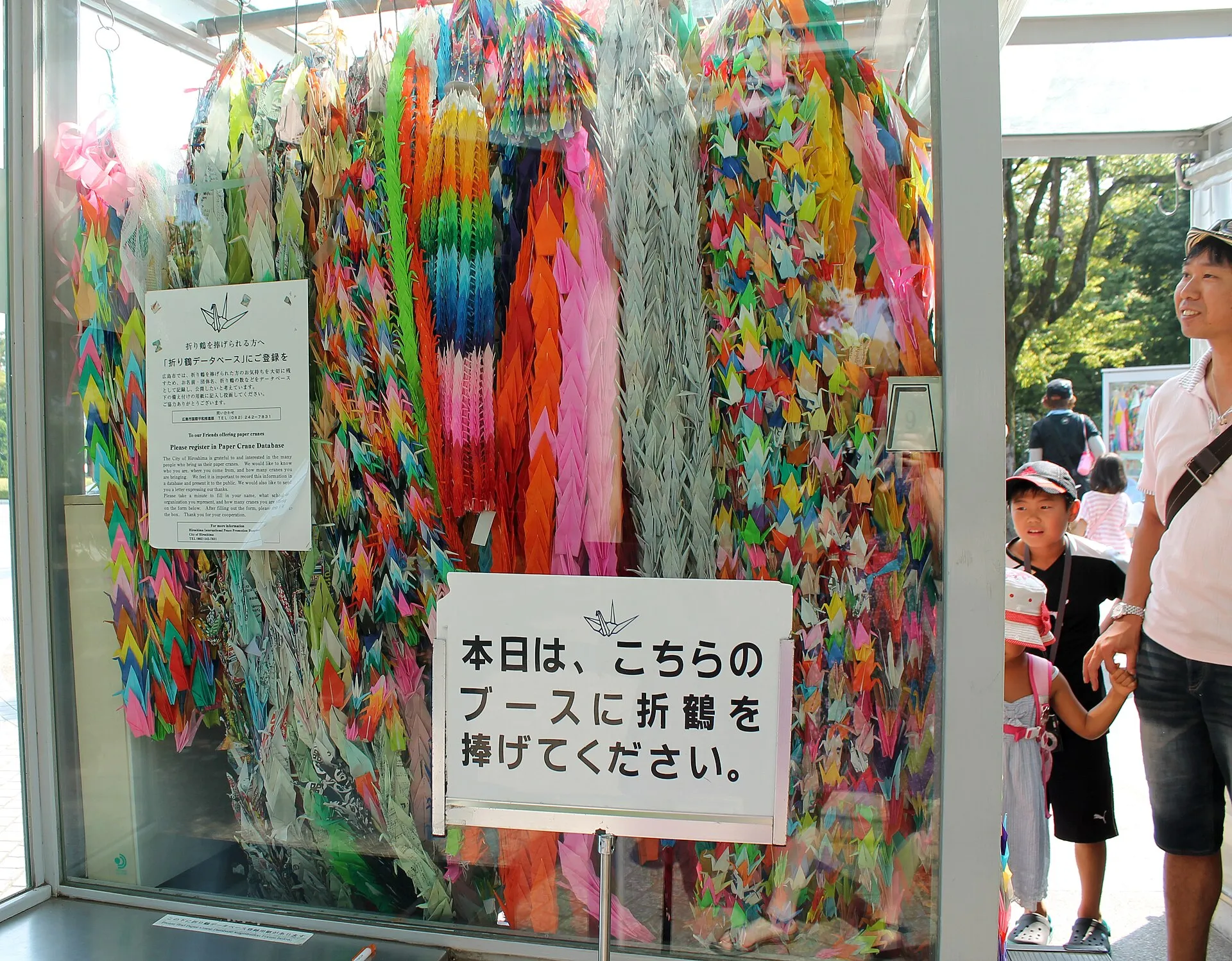
Long strings of folded paper cranes in many colours hanging in a glass booth at the Children’s Peace Monument, with visitors looking on.
Paper cranes left at the Children’s Peace Monument, Hiroshima. Sarah Stierch, CC BY 4.0, source

On 11 October 2024 the Norwegian Nobel Committee awarded the Peace Prize to Nihon Hidankyo, the national organisation of hibakusha founded in 1956. It honoured the survivors’ work for a world free of nuclear weapons, and their witness that such weapons must never be used again. Sources: 8

Sources for this page55
  1. US Department of Energy, Office of Scientific and Technical Information, The Atomic Bombing of Hiroshima. Checked 11 October 2026.
  2. Atomic Heritage Foundation, Hiroshima and Nagasaki Bombing Timeline. Checked 11 October 2026.
  3. US Department of Energy, Office of Scientific and Technical Information, The Atomic Bombing of Nagasaki. Checked 11 October 2026.
  4. Atomic Heritage Foundation, Jewel Voice Broadcast. Checked 11 October 2026.
  5. The National WWII Museum, What (and When) Is V-J Day?. Checked 11 October 2026.
  6. US National Archives, Milestone Documents, Surrender of Japan (1945). Checked 11 October 2026.
  7. Japan Ministry of Health, Labour and Welfare, History of support for atomic bomb survivors (in Japanese). Checked 11 October 2026.
  8. The Norwegian Nobel Committee, The Nobel Peace Prize 2024, press release. Checked 11 October 2026.
  9. Japan Ministry of Health, Labour and Welfare, Number of survivors holding a health certificate, and average age (in Japanese). Checked 11 October 2026.
  10. Radiation Effects Research Foundation, Frequently Asked Questions. Checked 11 October 2026.
  11. City of Hiroshima, How many people died as a result of the atomic bombing?. Checked 11 October 2026.
  12. Nagasaki City, Damage caused by the atomic bombing. Checked 11 October 2026.
  13. United States Strategic Bombing Survey, via atomicarchive.com, The Effects of Atomic Bombs on Hiroshima and Nagasaki (1946). Checked 11 October 2026.
  14. Manhattan Engineer District, via atomicarchive.com, The Atomic Bombings of Hiroshima and Nagasaki (1946), Total Casualties. Checked 11 October 2026.
  15. Hiroshima Peace Media Center, Chugoku Shimbun, Striving to fill voids in Hiroshima, Part 6: Korean victims. Checked 11 October 2026.
  16. nippon.com, The Japanese Historian Honoring Hiroshima's American Dead. Checked 11 October 2026.
  17. Mari Yamaguchi, Associated Press, via Anchorage Daily News, A forgotten chapter: the stories of Allied POWs in Nagasaki during the atomic bombing. Checked 11 October 2026.
  18. City of Hiroshima, The Realities of the Atomic Bombing. Checked 11 October 2026.
  19. City of Hiroshima, The Birth of Hiroshima, Peace Memorial City, part 2. Checked 11 October 2026.
  20. Hiroshima Prefecture, Black rain (in Japanese). Checked 11 October 2026.
  21. Japan Ministry of Health, Labour and Welfare, Who are atomic bomb survivors? (in Japanese). Checked 11 October 2026.
  22. Atomic Heritage Foundation, Survivors of Hiroshima and Nagasaki. Checked 11 October 2026.
  23. Japan Ministry of Health, Labour and Welfare, Survivor numbers by year (in Japanese). Checked 11 October 2026.
  24. The Nobel Prize, Nihon Hidankyo, Nobel Lecture, 10 December 2024. Checked 11 October 2026.
  25. Hiroshima Peace Culture Foundation, Monument in Memory of the Korean Victims of the A-bomb. Checked 11 October 2026.
  26. Japan Ministry of Health, Labour and Welfare, Measures for survivors living abroad (in Japanese). Checked 11 October 2026.
  27. Radiation Effects Research Foundation, Life Span Study (LSS). Checked 11 October 2026.
  28. Radiation Effects Research Foundation, Leukemia Risks among Atomic-bomb Survivors. Checked 11 October 2026.
  29. Radiation Effects Research Foundation, Solid Cancer Risks among Atomic-bomb Survivors. Checked 11 October 2026.
  30. Radiation Effects Research Foundation, Mental Disability and Growth Impairment among Survivors Exposed In Utero. Checked 11 October 2026.
  31. Radiation Effects Research Foundation, Genetic Effects of Radiation in the Offspring of Atomic-Bomb Survivors. Checked 11 October 2026.
  32. National Diet Library of Japan, Birth of the Constitution of Japan, Potsdam Declaration, 26 July 1945. Checked 11 October 2026.
  33. US Department of Energy, Office of Scientific and Technical Information, Potsdam and the Final Decision to Bomb. Checked 11 October 2026.
  34. William Burr (ed.), National Security Archive, The Atomic Bomb and the End of World War II (Briefing Book 716). Checked 11 October 2026.
  35. US Department of State, Office of the Historian, Foreign Relations of the United States, Conference of Berlin (Potsdam) 1945, volume II, document 1258. Checked 11 October 2026.
  36. The National WWII Museum, The End of World War II, 1945. Checked 11 October 2026.
  37. US Department of Energy, Office of Scientific and Technical Information, Japan Surrenders. Checked 11 October 2026.
  38. Richard B. Frank, The National WWII Museum, To Bear the Unbearable: Japan's surrender, part II. Checked 11 October 2026.
  39. Samuel J. Cox, Director of Naval History, US Naval History and Heritage Command, H-Gram 053-2: The Surrender of Japan. Checked 14 October 2026.
  40. Truman Library Institute, Japan Surrenders: Truman's press conference. Checked 11 October 2026.
  41. US National Archives, Featured Documents, Japanese Surrender Document. Checked 11 October 2026.
  42. Atomic Heritage Foundation, Bombings of Hiroshima and Nagasaki, 1945. Checked 11 October 2026.
  43. US Department of Energy, Office of Scientific and Technical Information, Debate Over How to Use the Bomb. Checked 11 October 2026.
  44. The Wilson Quarterly, Hiroshima at 60. Checked 11 October 2026.
  45. Richard B. Frank, The National WWII Museum, The Miraculous Deliverance. Checked 11 October 2026.
  46. United States Strategic Bombing Survey (HyperWar transcription), Summary Report (Pacific War), 1 July 1946. Checked 11 October 2026.
  47. City of Hiroshima, Peace Memorial Ceremony 2026 programme (in Japanese). Checked 11 October 2026.
  48. Prime Minister's Office of Japan, Nagasaki Peace Memorial Ceremony, 9 August 2026. Checked 11 October 2026.
  49. Prime Minister's Office of Japan, Statement on the 80th anniversary of the end of the war, Memorial Ceremony for the War Dead. Checked 11 October 2026.
  50. Hiroshima Peace Culture Foundation, Cenotaph for the A-bomb Victims. Checked 11 October 2026.
  51. City of Hiroshima, Register of the A-bomb dead (in Japanese). Checked 11 October 2026.
  52. Nagasaki City, Register of the A-bomb dead (in Japanese). Checked 11 October 2026.
  53. Hiroshima Peace Memorial Museum, Sadako Sasaki and the paper cranes. Checked 11 October 2026.
  54. Hiroshima Peace Culture Foundation, The Children's Peace Monument. Checked 11 October 2026.
  55. City of Hiroshima, Paper cranes. Checked 11 October 2026.
Where sources differ9
  • Every count is an estimate. The City of Hiroshima gives roughly 140,000 deaths by the end of December 1945. Nagasaki City gives 73,884. The first US reports in 1946 gave much lower figures.
  • Estimates of how many people were in Hiroshima that morning run from about 245,000 (US Strategic Bombing Survey) and 255,000 (Manhattan Engineer District) to 340,000 to 350,000 (RERF and the City of Hiroshima).
  • Estimates of Nagasaki's population at the time run from 195,000 (Manhattan Engineer District) and almost 200,000 (OSTI) to 240,000 (Nagasaki) and 250,000 to 270,000 (RERF).
  • Estimates of Korean deaths range from 5,000 to 8,000 to as many as 30,000 in Hiroshima alone, and none rests on firm records. Twelve American prisoners died at Hiroshima. At least eight Allied prisoners died at Nagasaki.
  • The US Strategic Bombing Survey, quoting Japanese figures, gave 62,000 of 90,000 buildings in Hiroshima destroyed, about 69 per cent.
  • The City of Hiroshima gives about 13 square kilometres burned. US sources give 4.4 square miles, about 11.4 square kilometres.
  • For Nagasaki, OSTI gives 14,000 of 52,000 homes destroyed and 5,400 seriously damaged.
  • Estimates of what an invasion would have cost range from tens of thousands of American casualties in the first month to post-war claims of a million. Historians disagree over which figures were in front of Truman in 1945.
  • A popular account says Sadako Sasaki folded only 644 cranes. The Hiroshima Peace Memorial Museum says she had passed 1,000 by the end of August 1955.

Checked against its sources on 11 October 2026.