The race that was not
The German bomb
The Manhattan Project began in fear that Germany would build the bomb first. Germany had discovered fission, had some of the world’s best physicists, and started first. It never came close. This page sets out how far it got, why, and what its scientists said when they heard about Hiroshima.
Fission, discovered in Berlin
Nuclear fission was discovered in Germany. In December 1938 Otto Hahn and Fritz Strassmann, in their Berlin laboratory, found barium among the products of uranium bombarded with neutrons. Sources: 2
Lise Meitner, their colleague, had fled Berlin that summer. With Otto Frisch she explained the result and named it nuclear fission, in a paper published on 11 February 1939. Sources: 10
Hahn alone received the 1944 Nobel Prize in Chemistry. Historians who studied the Nobel committee’s records call the award controversial because Strassmann and Meitner were left out. Sources: 10 11 12

Fear of a German bomb
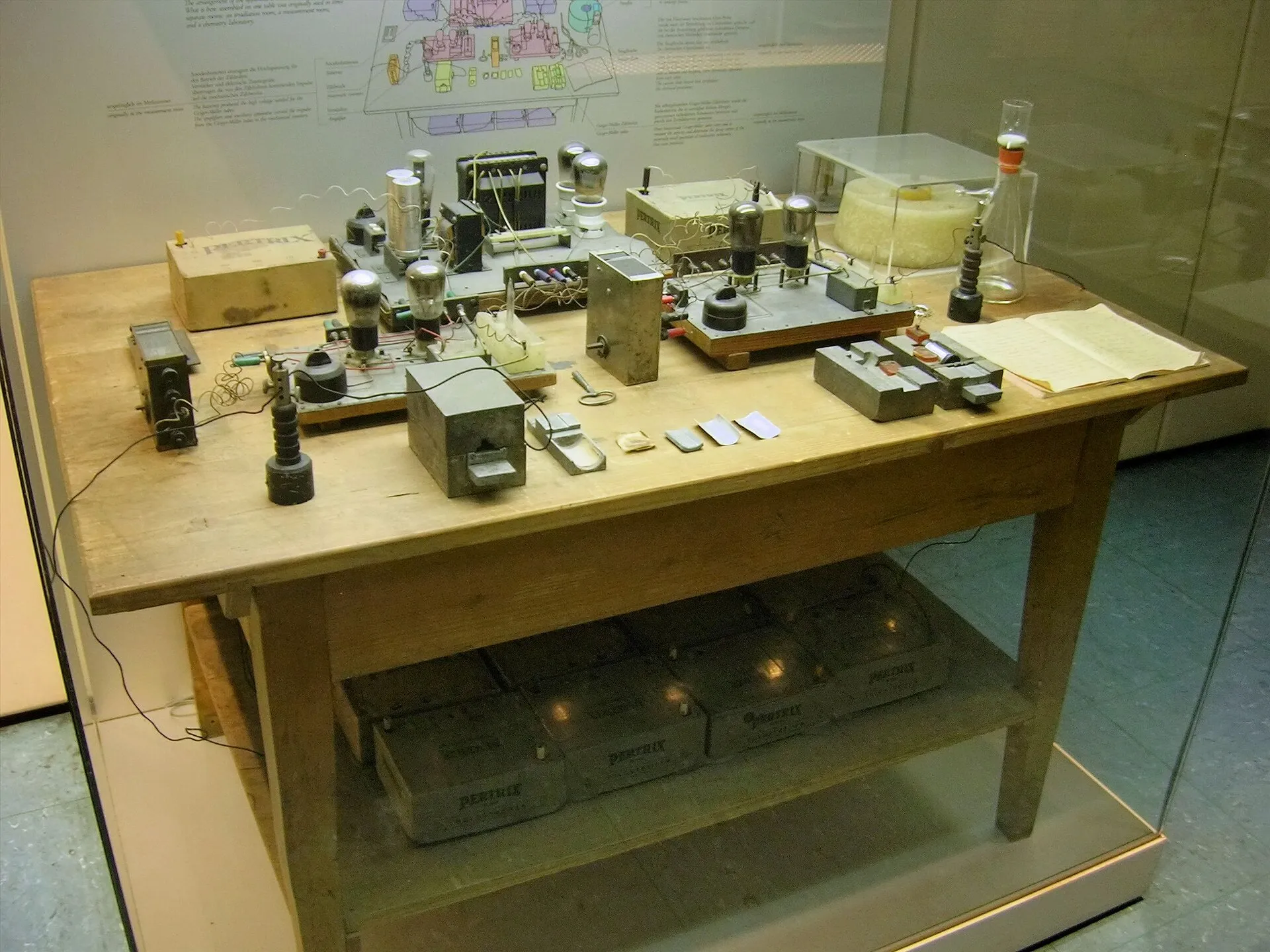
The Allied project began in fear. Einstein’s letter to Roosevelt of 2 August 1939 noted that Germany had stopped the sale of uranium from the Czech mines it had taken over. Sources: 13 14
In Britain in 1940, Otto Frisch and Rudolf Peierls warned that it was “quite conceivable that Germany is, in fact, developing this weapon.” Sources: 15
General Groves later explained the assumption the project worked on: “we had to assume that the most competent German scientists and engineers were working on an atomic program with the full support of their government”. Sources: 3
The Uranium Club
Germany started first. Kurt Diebner of the Army Ordnance Office held the first meeting of the Uranverein, the Uranium Club, on 16 September 1939. Werner Heisenberg was brought in for the theory of chain reactions. Sources: 3 4 16
The work was spread across institutes in Berlin, Hamburg, Leipzig, Heidelberg and the Army’s centre at Gottow, with “fierce competition over finite resources, bitter interpersonal rivalries, and ineffectual scientific management”. Sources: 17 18
It stayed small. One account puts it at “no more than a few dozen scientists scattered across the country”, against the thousands employed by the Manhattan Project. Sources: 16 19
Why Germany never built it
By the end of 1941 the scientists had shown that a reactor, a “uranium machine”, could work. Army Ordnance decided against an industrial effort. The historian Mark Walker calls this “the final verdict, which never was reassessed.” Sources: 4 17
In June 1942 Heisenberg told Albert Speer, the armaments minister, that a bomb could not be built before 1945 and would need large resources. Work on a reactor went on, but no bomb programme was ordered. Sources: 3 4 20
Heisenberg later made this meeting the turning point. Walker disagrees: “the decision to leave the research at the laboratory scale was made by Army Ordnance alone, more than half a year before the meeting with Speer.” Sources: 17
Heavy water and Vemork
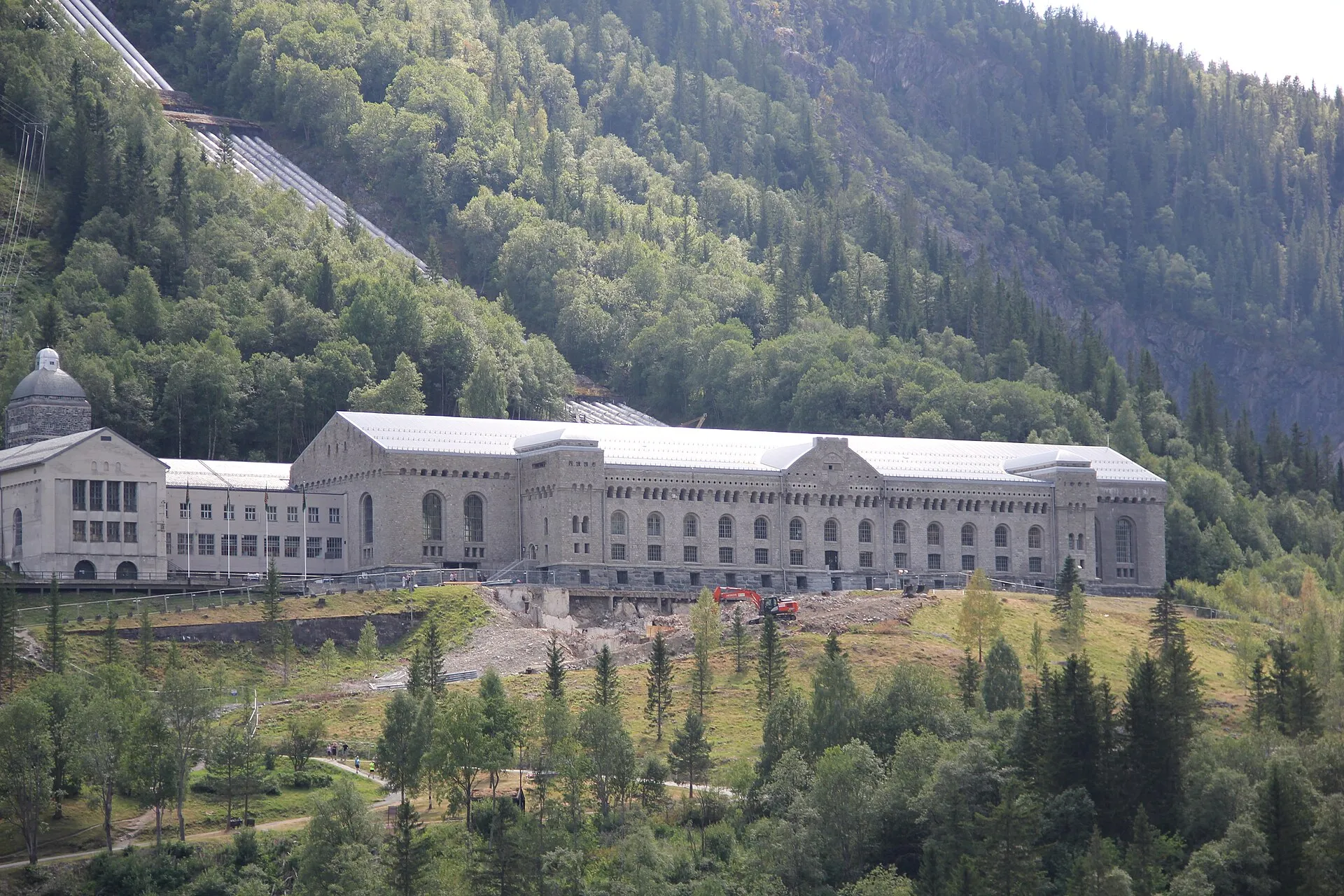
Germany chose heavy water to slow the neutrons in its reactors. The world’s first industrial producer was the Norsk Hydro plant at Vemork, in occupied Norway. Sources: 6 17
On the night of 27 to 28 February 1943, Norwegian commandos of Operation Gunnerside crossed the gorge, entered the plant and blew up the heavy water cells, destroying about 500 kilograms of heavy water. No one was captured or killed. Sources: 5 6
Production restarted by May. An American bombing raid on 16 November 1943 killed 22 civilians when a bomb hit a shelter. Sources: 5 6
When the Germans moved the remaining stock, saboteurs sank the ferry Hydro on Lake Tinnsjø on 20 February 1944. Eighteen people were killed: 14 Norwegian civilians and 4 German soldiers. Sources: 5

Haigerloch: the last reactor
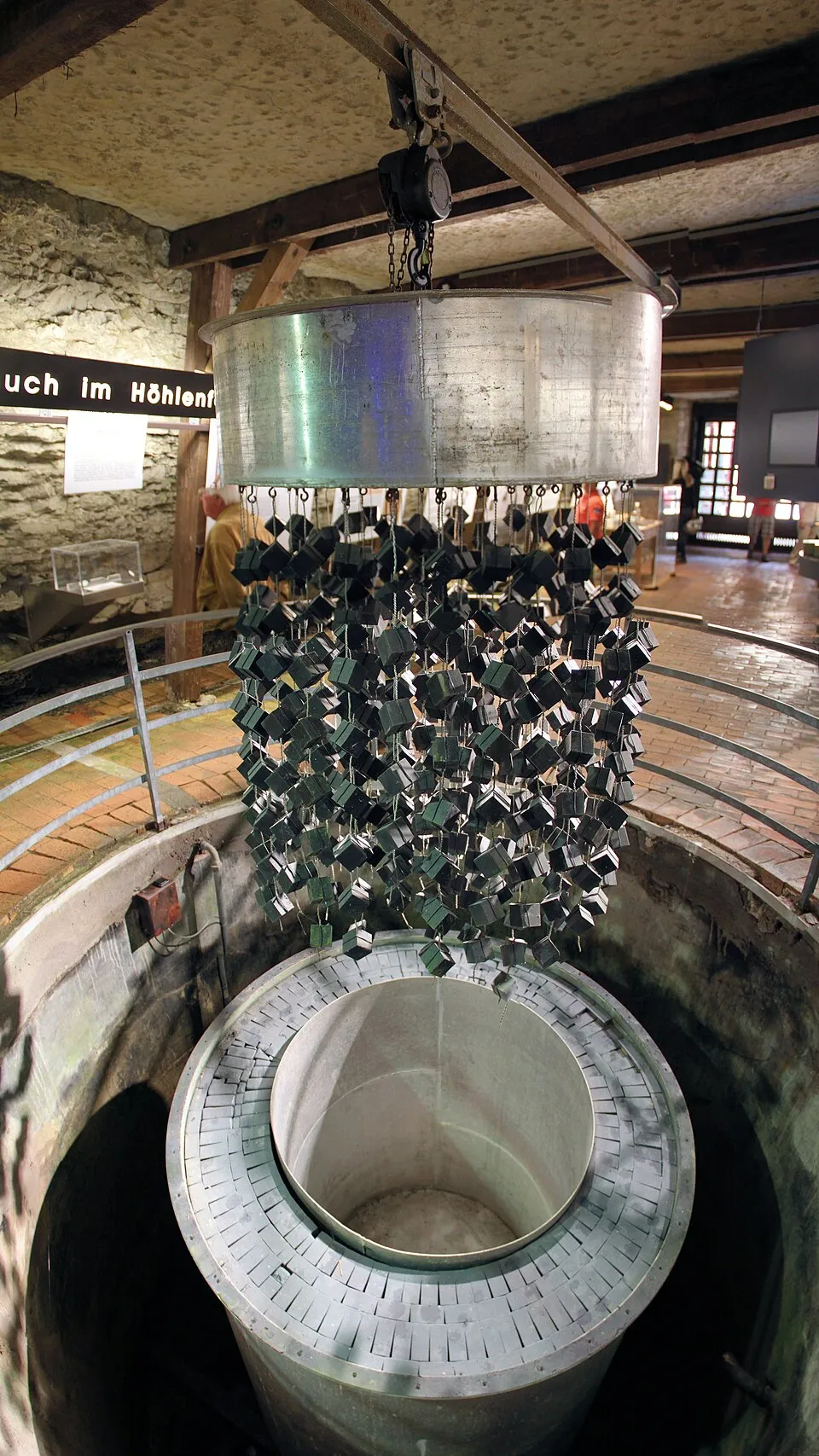
In 1945 the Berlin reactor group moved south to a beer cellar in the small town of Haigerloch. Their last experiment, B-VIII, hung 664 cubes of uranium on chains in heavy water. Sources: 4 18 21
It never went critical. The scientists measured a neutron multiplication of about 6.7. Later modelling shows it would have needed about half as many cubes again. Sources: 18 21 22
There was no more uranium or heavy water to be had. About 400 more cubes sat with Diebner’s rival group, and together the two stocks would have been “more than enough” to reach criticality. Sources: 18 21

How far each got
Germany set up its programme before the Allies, but went no further than the laboratory. Sources: 4 17
| Milestone | US and Britain | Germany |
|---|---|---|
| 1A programme set upSources: 4 14 | October 1939 | September 1939 |
| 2An industrial effort approvedSources: 17 23 | August 1942 | Not reached |
| 3A chain reaction in a reactorSources: 18 21 24 25 | 2 December 1942 | Not reached |
| 4Plutonium made in a production reactorSources: 26 27 | 26 September 1944 | Not reached |
| 5A bomb testedSources: 28 29 | 16 July 1945 | Not reached |
| 6A bomb used (Little Boy, on Hiroshima)Sources: 30 31 | 6 August 1945 | Not reached |
The Alsos mission
From the autumn of 1943 an American mission called Alsos followed the armies into Europe to find out how far Germany had got. Lieutenant Colonel Boris Pash commanded it, and the physicist Samuel Goudsmit led its scientists. Sources: 32
In November 1944, papers found at Strasbourg showed that the German programme had not got beyond research. Sources: 4 33
Alsos took Haigerloch on 23 April 1945 and dismantled the reactor the next day. The cubes had been buried in a field. Hechingen, where Heisenberg’s institute had moved, fell on 24 April. Sources: 4 18 32
Farm Hall
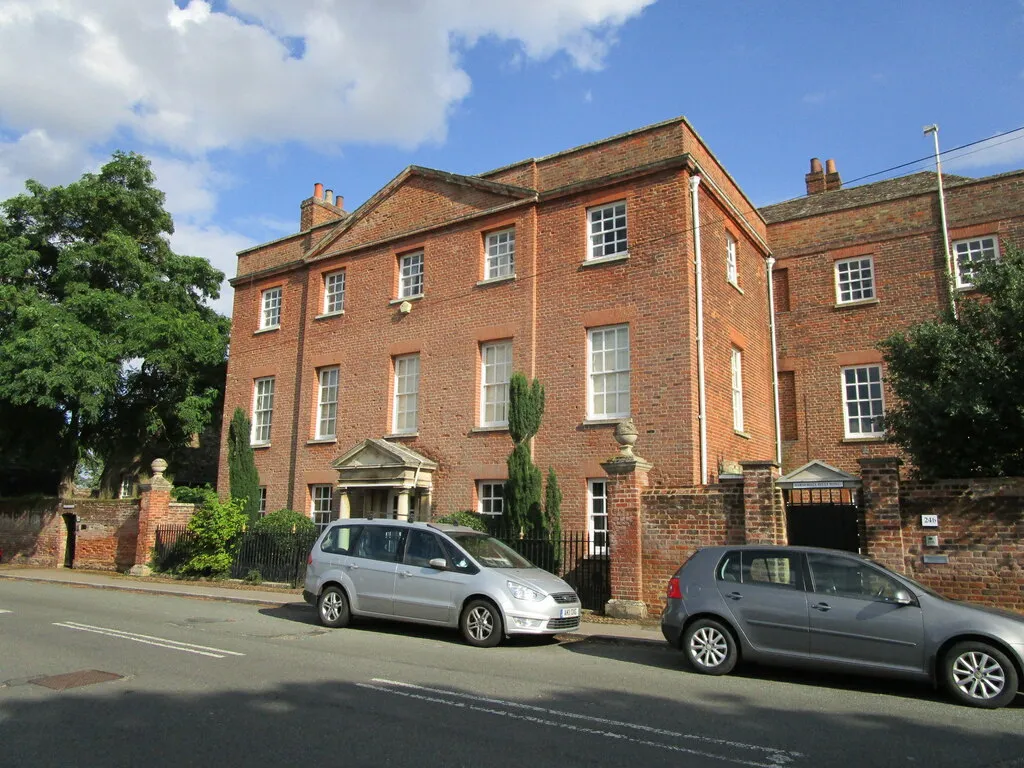
From 3 July 1945 to 3 January 1946, ten German nuclear scientists were held at Farm Hall, a country house at Godmanchester near Cambridge. Among them were Heisenberg, Hahn, von Weizsäcker and Diebner. Their rooms were bugged. Sources: 7 8 34
The transcripts of what they said were kept secret until 1992. These are three of the moments recorded after the news of Hiroshima. Sources: 9 35
-
- Date
- 6 August 1945
- From
- Major T. H. Rittner, the British officer in charge
- To
- London, with a copy for General Groves
- Held at
- US National Archives, RG 77, and the UK National Archives
Hahn hears the news
he felt personally responsible for the deaths of hundreds of thousands of people, as it was his original discovery which had made the bomb possible.
Rittner told Otto Hahn shortly before dinner, after the BBC announced the bomb. When Hahn told the others, they at first refused to believe it. Heisenberg said: “I don’t believe a word of the whole thing.”Sources: 7
-
- Date
- 6 August 1945
- From
- The ten scientists at dinner and afterwards, recorded in secret
- Held at
- US National Archives, RG 77
“We didn’t want to succeed”
I believe the reason we didn’t do it was because all the physicists didn’t want to do it, on principle. If we had all wanted Germany to win the war we would have succeeded.
Carl Friedrich von Weizsäcker said this. Hahn answered: “I don’t believe that but I am thankful we didn’t succeed.” Later that night Erich Bagge said it was “absurd” for Weizsäcker to claim he had not wanted it to succeed: “That may be so in his case, but not for all of us.”Sources: 7 9 34
How it is read
- Jeremy Bernstein and David Cassidy see here the start of the “version” the German scientists told after the war.
- Thomas Powers still cites the transcripts as evidence that Heisenberg found a way to say no.
-
- Date
- 7 August 1945
- From
- Carl Friedrich von Weizsäcker to Max von Laue
- Held at
- US National Archives, RG 77
How history should remember it
the peaceful development of the uranium engine was made in GERMANY under the HITLER regime, whereas the Americans and the English developed this ghastly weapon of war.
The next day the ten agreed a memorandum saying that it “did not appear feasible at the time to produce a bomb with the technical possibilities available in Germany.”Sources: 7 9 34
How it is read
- Max von Laue wrote in 1959 that Weizsäcker led these talks, and “I did not hear the mention of any ethical point of view.”
That night Heisenberg put the critical mass at “about a ton”. A week later he gave his colleagues a lecture working out a far smaller figure. Bernstein and Cassidy found no “convincing evidence” that he had ever done the calculation before. Sources: 34 35

The version they told
After the war the claim grew that the German scientists could have built a bomb but chose not to, on principle. Max von Laue called it the Lesart, the version. Sources: 9 34
Most historians reject it. The American Institute of Physics says the idea that Heisenberg joined the project to sabotage it is, in the opinion of most researchers, “not well supported”. Sources: 36
At the poles of the argument, Thomas Powers portrayed Heisenberg as a resister who denied Hitler the bomb, and Paul Lawrence Rose argued he was morally no better than the worst of the Nazis. Sources: 9
Copenhagen, 1941
In September 1941 Heisenberg visited Niels Bohr in occupied Copenhagen. No one else heard what they said on their walk. What is clear is that the military use of fission came up. Sources: 9 37
In 2002 the Bohr family released letters Bohr had drafted to Heisenberg but never sent. They show Bohr remembered the meeting very differently from Heisenberg’s later account. The archive warns that all were written sixteen years or more after the event. Sources: 9 38 39
Michael Frayn’s play Copenhagen, which opened at the National Theatre in London in 1998, brought the meeting to a wide audience. Sources: 9 40
The claim of a German test
In 2005 the historian Rainer Karlsch argued, from witness accounts and documents found in Russian archives, that a group under Kurt Diebner had tested a nuclear device in Thuringia in March 1945. Sources: 19 41
Germany’s national metrology institute, the PTB, analysed eight soil samples from the Ohrdruf training area and found no evidence of a nuclear explosion. It said a test would still have left traces its methods could detect, though it could not rule one out entirely. Sources: 42
Months after the book appeared, Karlsch revised his claims, saying there had been no large nuclear explosion and probably not even fission. He has gone on speaking on the subject, including at a 2025 seminar on the American and German bomb projects. Sources: 43 44
Japan’s programmes
Japan had two small programmes. The Army’s, known as Ni-Go, was led by Yoshio Nishina at RIKEN in Tokyo and authorised in April 1941. The Navy’s, F-Go, was led by Bunsaku Arakatsu at Kyoto. Sources: 45 46 47
Nishina’s group judged a bomb possible in theory but not in practice. Allied bombing destroyed its separation equipment in April 1945, and Nishina declared the project over in June. Japan never enriched enough uranium for a weapon. Sources: 45
In November 1945 the occupation authorities destroyed Japan’s cyclotrons, research machines, and dumped Nishina’s in Tokyo Bay. On 14 December the US Secretary of War said publicly that the order was “a mistake”. Sources: 45 46 48 49 50
U-234
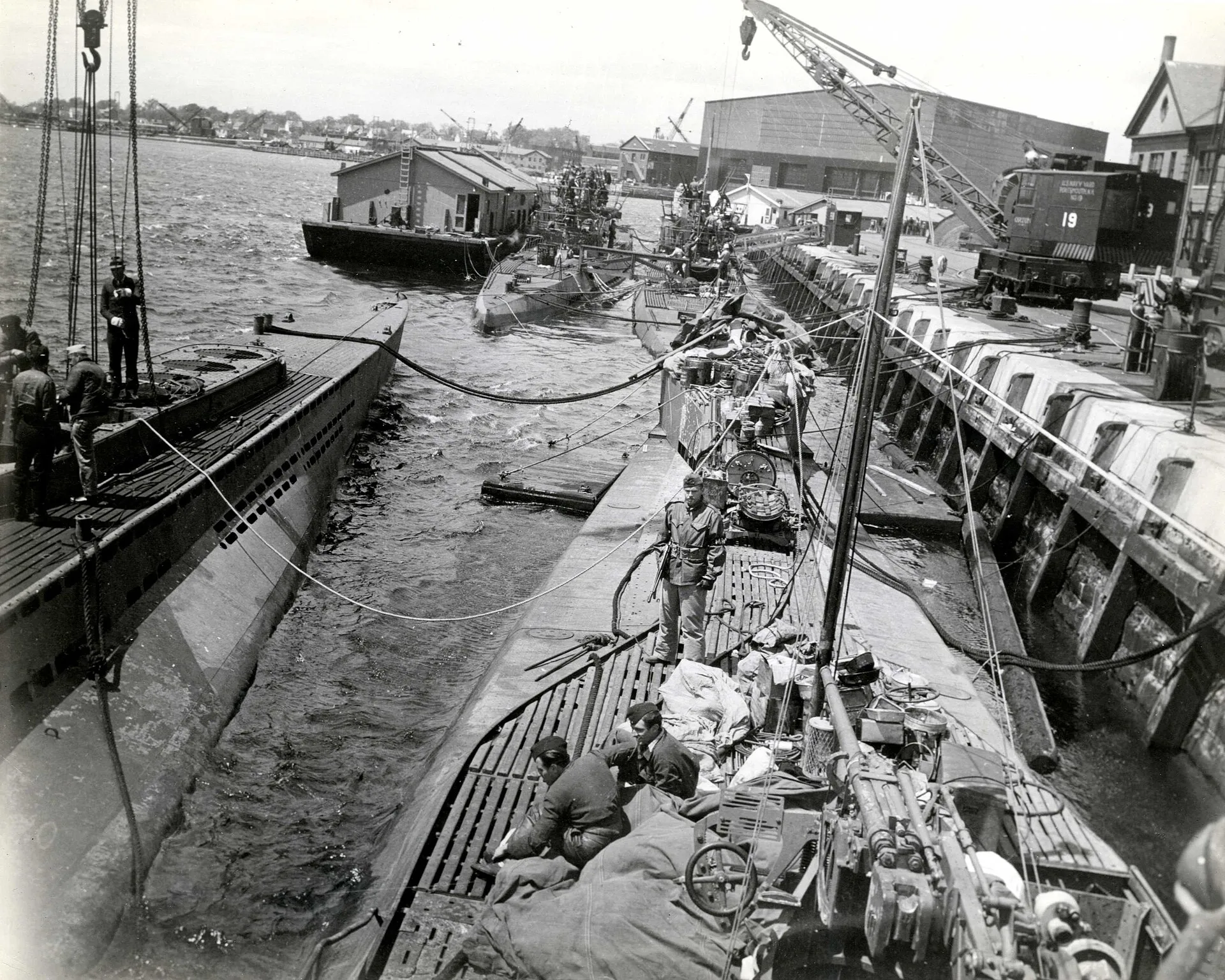
In April 1945 the German submarine U-234 sailed from Norway for Japan, carrying a jet fighter, other weapons and about 1,200 pounds of uranium oxide. After Germany surrendered it gave itself up to the US Navy, and was brought into Portsmouth, New Hampshire, on 19 May 1945. Sources: 51 52 53
What became of the uranium is not known. The US Navy’s historians say it “may have been used in the Manhattan Project”, but that this is unconfirmed. Sources: 51 52 54