Where the two journeys can be seen today
Visit
Most of the places in this story can still be visited, from the desert of New Mexico to the island of Tinian and the two cities in Japan. Each card says what you will see and links to the official page. Opening times, prices and tour rules change, so check that page before you travel.
Before you go
The places in Hiroshima and Nagasaki are memorials as well as museums. Several of the places in the United States are on working military or government land, with their own rules for entry. The cards give the rules the official pages state.
Hiroshima

-
Both journeys
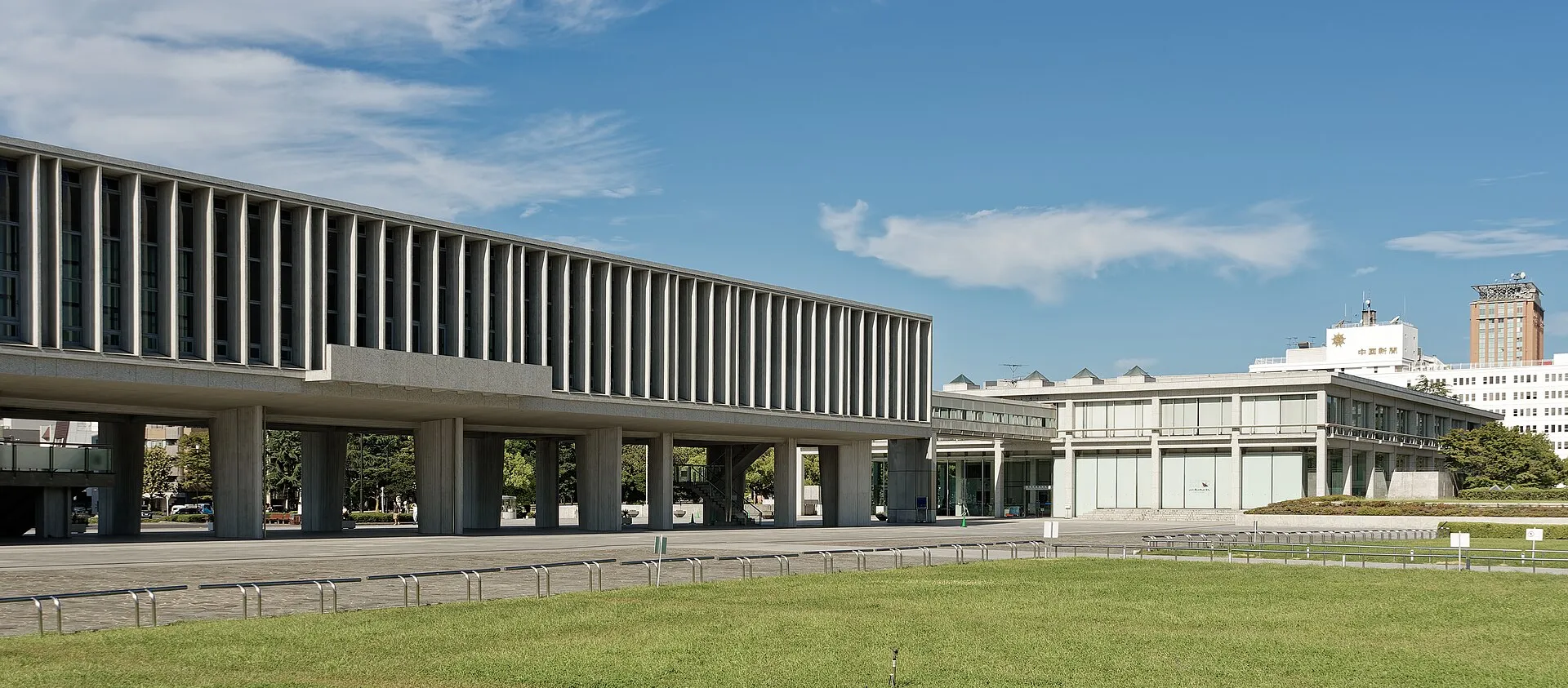
Hiroshima Peace Memorial Museum
Peace Memorial Park, Hiroshima
Opened on 24 August 1955, the museum shows belongings left by the victims, objects damaged by the bomb, and survivors’ testimony. In 2006 its Main Building became the first post-war building named a national Important Cultural Property.Sources: 5 6 7 8
- Tickets
- Web tickets are strongly recommended and can sell out.
- Getting there
- There is no public parking. The nearest tram stop is Genbaku Domu Mae.
- Talks
- Successors trained by survivors give a free talk every day, one of them in English. No booking is needed.
-
Both journeys
The Atomic Bomb Dome and Peace Memorial Park
Hiroshima
The Dome was the only structure left standing in the area where the bomb exploded. It became a UNESCO World Heritage Site in 1996 and is seen from outside its fence. The park around it holds the cenotaph by Kenzo Tange and the Children’s Peace Monument.Sources: 9 10 11
- Paper cranes
- Anyone may leave cranes at the Children’s Peace Monument, or post them to the city.
-
Both journeys
Hiroshima National Peace Memorial Hall
Peace Memorial Park, Hiroshima
Opened in 2002, the hall holds the names and photographs of the dead, a library of memoirs and testimony videos, and a hall of remembrance with a panorama of the ruined city as seen from the hypocentre.Sources: 12 13 14
- Entry
- Free.
Nagasaki
-
Both journeys
Nagasaki Atomic Bomb Museum
Hirano-machi, Nagasaki
Opened in April 1996, the museum shows objects damaged by the bomb, photographs, the events that led to the bombing and the history of nuclear weapons. Its labels are in Japanese, English, Chinese and Korean.Sources: 15 16 17 18
- Talks
- Survivors and their successors talk to groups booked one year to one month ahead, for a fee.
-
Both journeys
Nagasaki National Peace Memorial Hall
Next to the Atomic Bomb Museum, Nagasaki
Opened in July 2003. A basin of water at ground level remembers the water the victims longed for, and is lit at night by about 70,000 lights. The hall of remembrance lies below it.Sources: 19 20
- Entry
- Free.
-
Both journeys
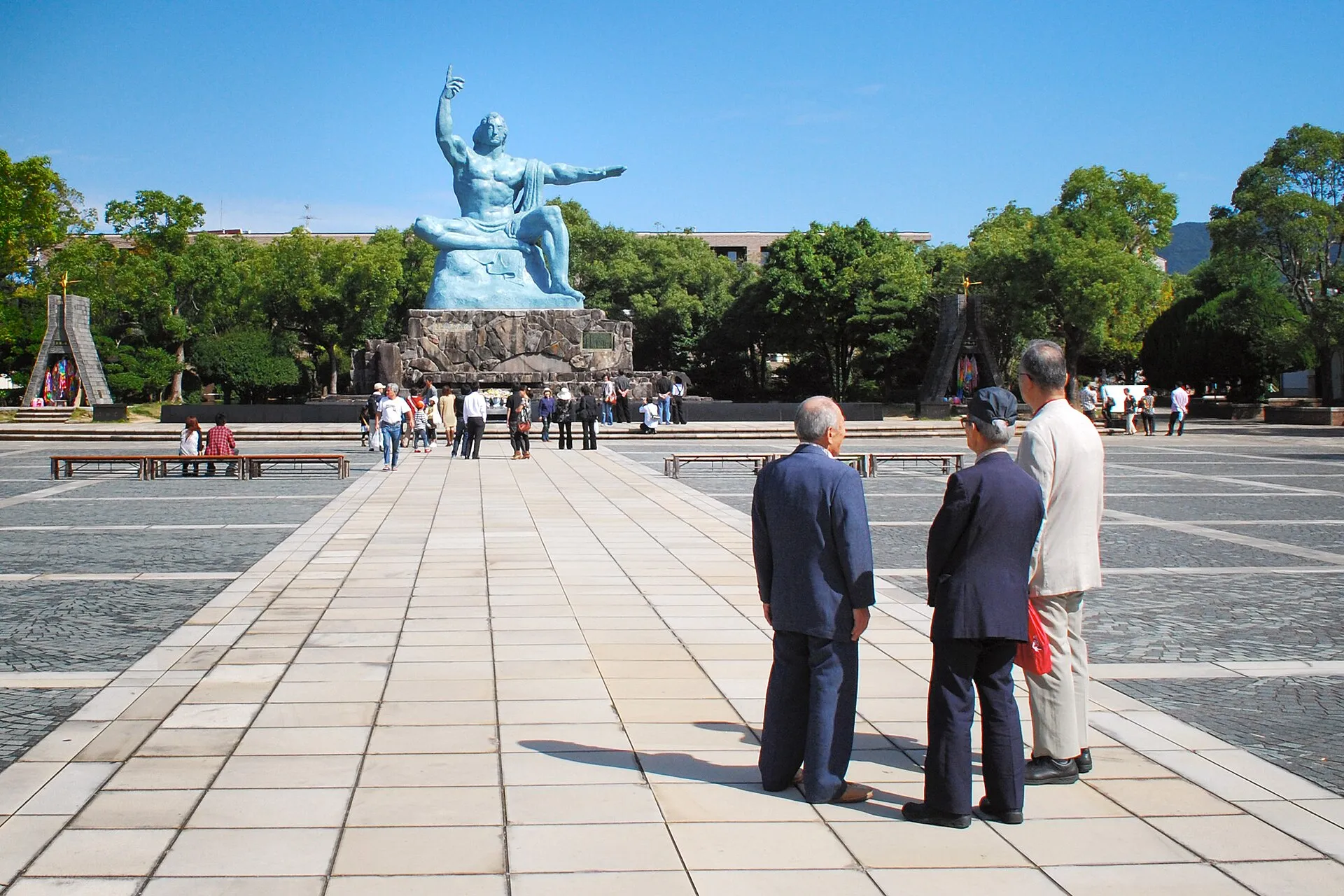
Peace Park and the Peace Statue
Matsuyama-machi, Nagasaki
Seibo Kitamura’s bronze statue, completed in 1955, is about 9.7 metres tall. In the sculptor’s words, the right hand points to the atomic bomb, the left hand means peace, and the face prays for the war dead. The memorial ceremony is held before it every 9 August.Sources: 21 22
-
Both journeys
The hypocentre
Matsuyama-machi, Nagasaki
A black granite monument marks the spot about 500 metres below where the bomb exploded at 11:02. A box in front of it holds the register of the dead on microfilm, and layers of earth from 1945 are kept on the river bank beside it.Sources: 23 24
-
Both journeys
The one-legged torii and Urakami Cathedral
Nagasaki
About 800 metres from the hypocentre, the blast threw down one pillar of Sanno Shrine’s second gateway, and the heat wore away the letters on the side facing the bomb. Urakami Cathedral, destroyed on 9 August 1945, was rebuilt in 1959. Its fallen bell tower dome still lies in the stream below.Sources: 24 25 26 27 28
- Visiting
- The cathedral is a working church. Entry is free.

Tinian and Saipan

-
Both journeys
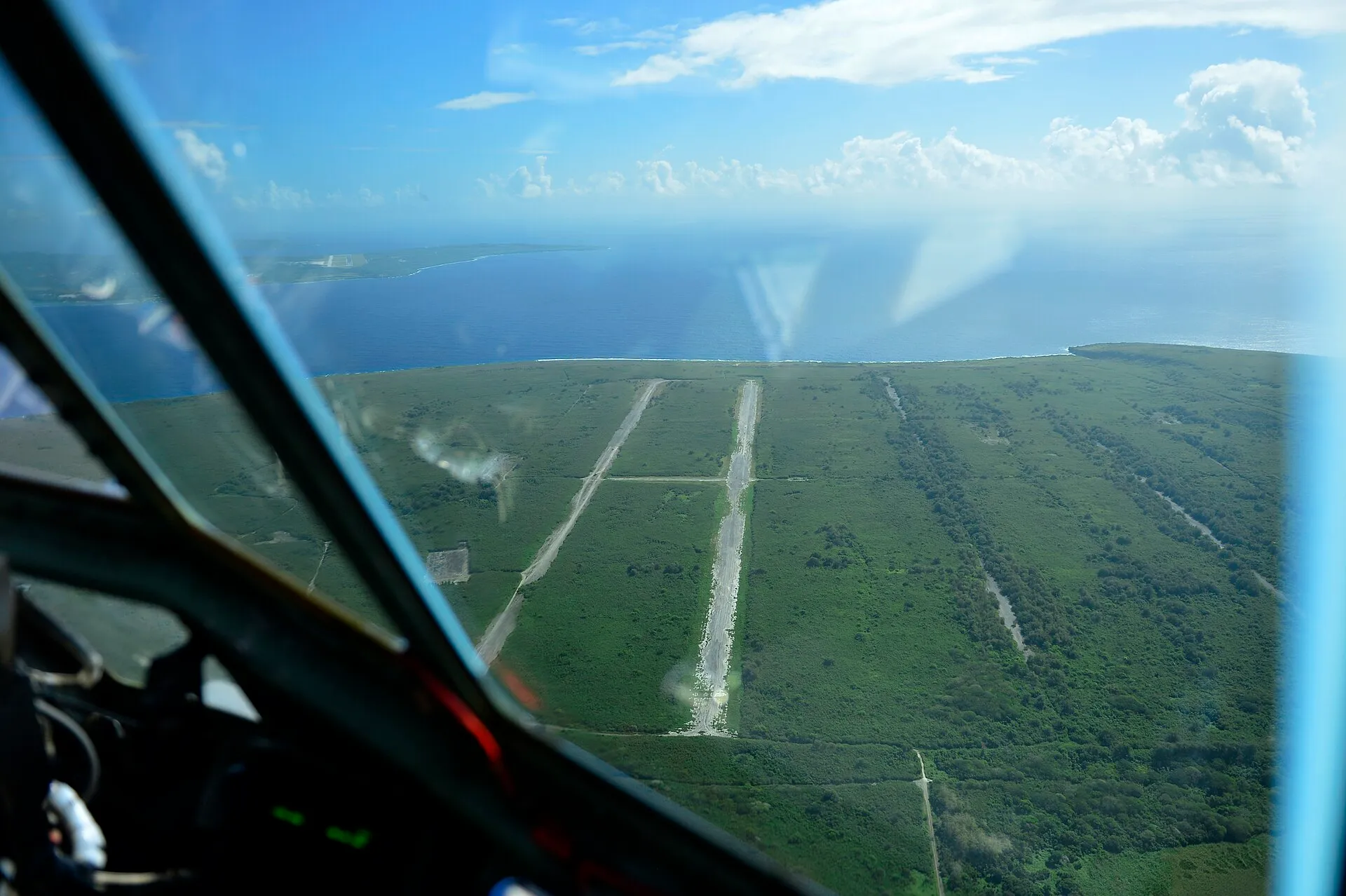
North Field and the loading pits
Tinian, Northern Mariana Islands
North Field’s four B-29 runways, taxiways and two service aprons are a National Historic Landmark, named in 1985. Enola Gay took off from Runway 1. The two loading pits sit under glass covers, with a marker between them.Sources: 29 30 31 32 33 34 35
- Access
- The land is leased to the US military. It is usually open to the public, but can be closed during exercises.
- Building work
- Two of the runways are being rebuilt, due to finish by 2027.
- Getting there
- Fly from Saipan. The flight takes about 15 minutes. A ferry is only being studied.
-
Both journeys
American Memorial Park
Garapan, Saipan
The park remembers the Americans and Marianas people who died in the 1944 Marianas campaign. Its visitor centre has a film and an exhibit on the Battle of Saipan.Sources: 36 37
- Entry
- No entrance fee.
Where the bomb was made and tested
-
The bomb
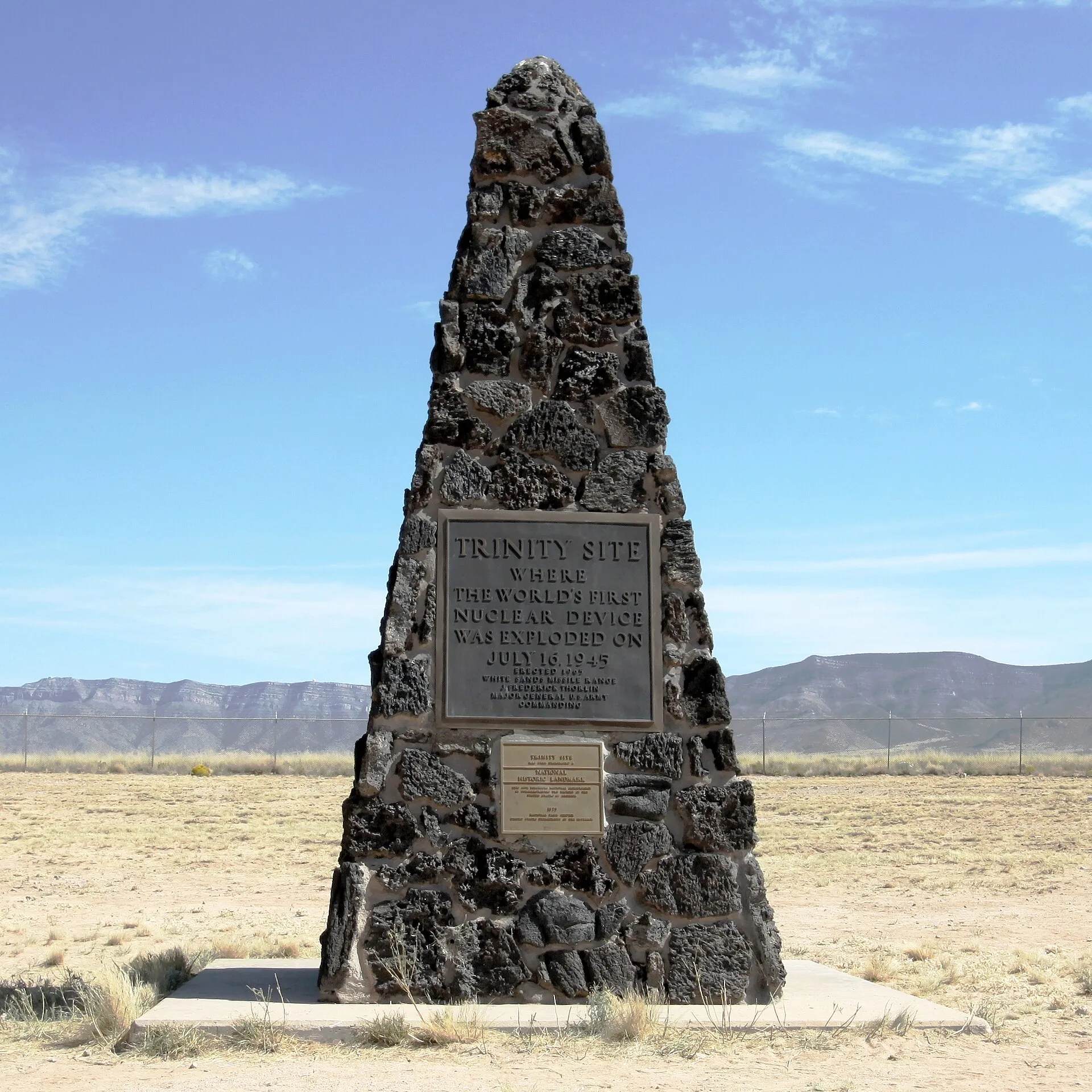
Trinity Site
White Sands Missile Range, New Mexico
An obelisk put up by the Army in 1965 marks Ground Zero of the first atomic test, on 16 July 1945. A shuttle runs to the McDonald Ranch House, where the plutonium core was assembled.Sources: 3 38
- Open
- One day a year, the third Saturday in October. The next is 17 October 2026.
- Getting in
- Through Stallion Gate. No booking and no fee. Photo ID for everyone 18 and over, and a passport for foreign nationals.
- Radiation
- The Army says an hour inside the fenced area gives a dose of one-half to one millirem.
-
The bomb
Los Alamos
Manhattan Project National Historical Park, New Mexico
The laboratory is closed to the public. In town are the park’s visitor centre, Fuller Lodge and the houses of Bathtub Row, and the Bradbury Science Museum, with full-scale models of Fat Man and Little Boy and an original Fat Man fireset.Sources: 39 40 41 42 43
- Entry
- The museum and the visitor centre are free. The museum is closed on Mondays.
- Behind the fence
- Tours of the park’s sites on laboratory land run on a few dates in May and October, and places are limited.
-
The bomb
Oak Ridge
Manhattan Project National Historical Park, Tennessee
The American Museum of Science and Energy, founded in 1949, has galleries on the Manhattan Project. It is the start of the Department of Energy’s bus tour, which visits the K-25 Atomic History Center and the Y-12 New Hope Visitor Center.Sources: 44 45 46 47
- Bus tour
- Booking needed. US citizens aged 10 and over only, with original photo ID. The 2026 season ends on 20 November.
-
The bomb
Hanford
Manhattan Project National Historical Park, Washington
B Reactor first went critical on 26 September 1944. It is closed while the Department of Energy replaces its roof, and its tours are suspended. The free Pre-War Historic Sites bus tour runs from May to September and passes the reactor, but visitors stay on the bus.Sources: 4 48 49 50 51
- Reopening
- The Department of Energy expects reactor tours to resume in late summer 2027.
-
Both journeys
National Museum of Nuclear Science and History
Albuquerque, New Mexico
Its Heritage Park shows a B-29 with a Fat Man bomb casing. The aircraft never saw combat, and served with the 509th at Roswell from 1946.Sources: 52 53

Where the aircraft are
-
The plane
Enola Gay
Steven F. Udvar-Hazy Center, Chantilly, Virginia
The aircraft that dropped Little Boy is shown in the World War II Aviation exhibition of the Smithsonian’s National Air and Space Museum. The museum restored it in house over ten years.Sources: 54 55 56
- Entry
- Free, with no passes needed. Parking is charged.
- Open
- Every day except 25 December.
-
The plane
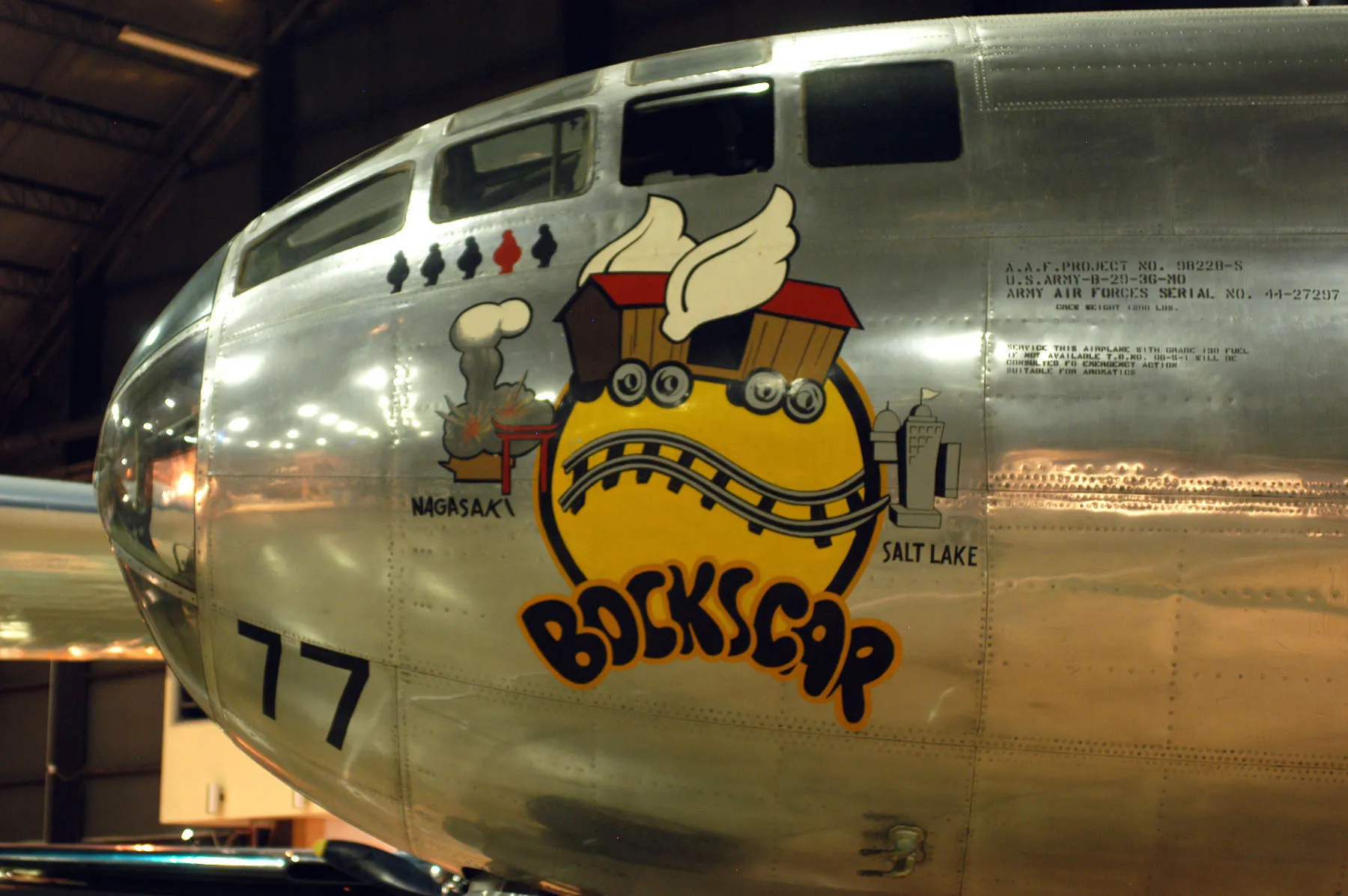
Bockscar
National Museum of the US Air Force, Dayton, Ohio
The aircraft that dropped Fat Man is in the museum’s World War II Gallery. Its nose art was added after the Nagasaki mission.Sources: 57 58 59
- Entry
- Free. Visitors are screened at the entrance.
-
The plane
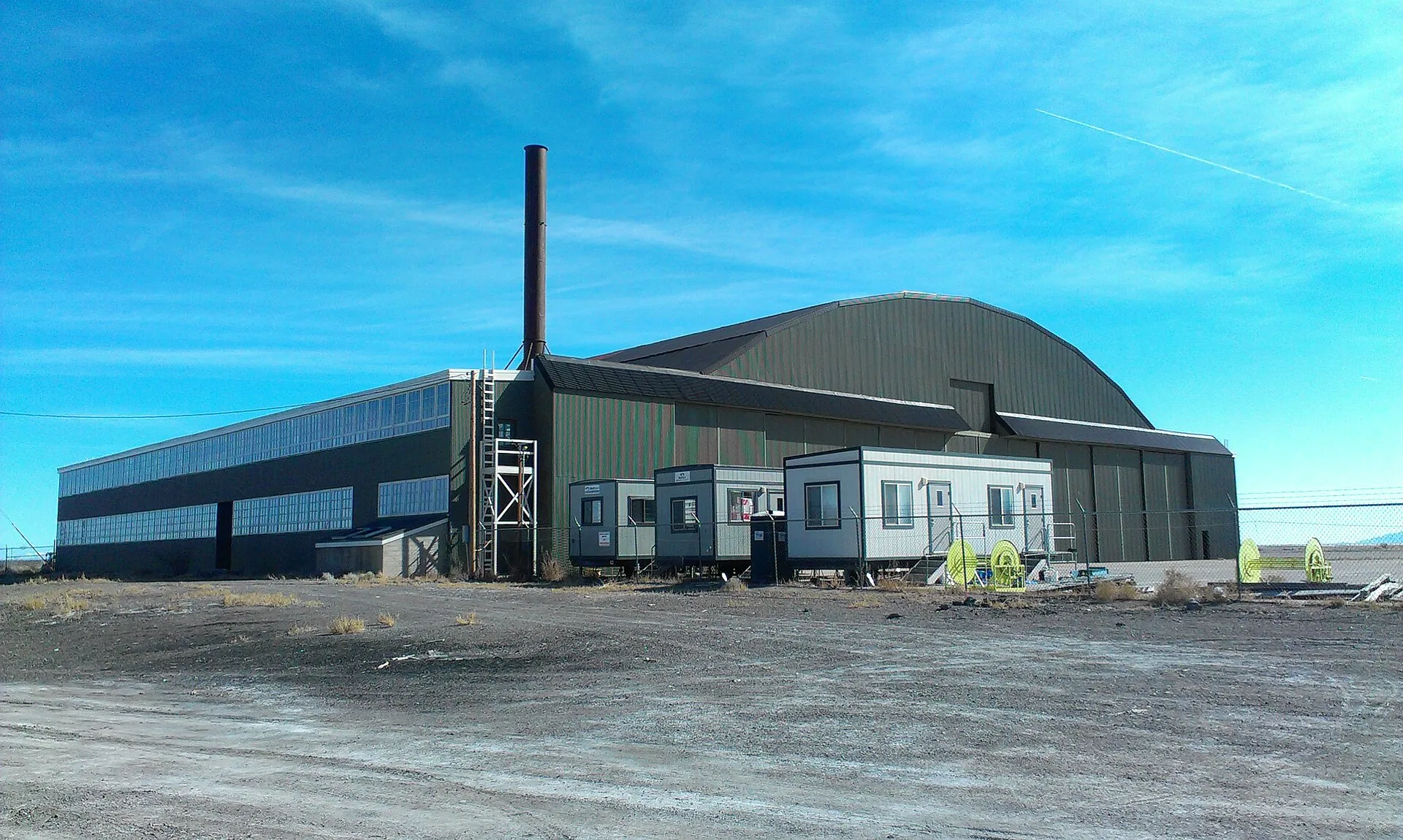
Historic Wendover Airfield
Wendover, Utah
The 509th Composite Group trained here from December 1944 to May 1945, before it left for Tinian. Guided tours visit the B-29 hangar and the atomic bomb loading pit.Sources: 60 61
- Tours
- Book by phone. Admission is charged.
-
The plane
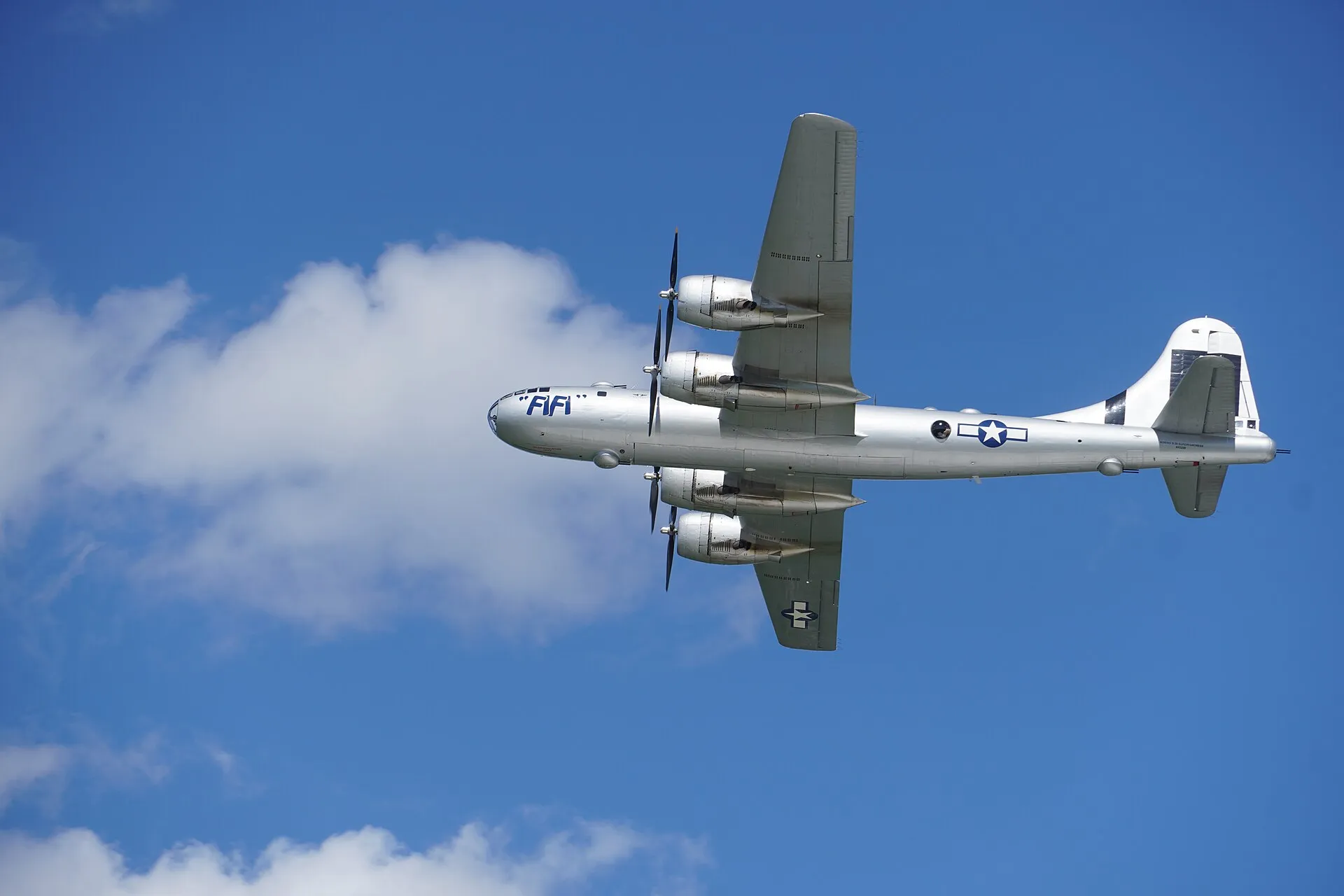
FIFI
Commemorative Air Force, Dallas, Texas
A B-29 that still flies. The Commemorative Air Force takes it round the country on its AirPower History Tour.Sources: 62 63
- Rides
- Offered at tour stops, for riders aged 12 or older.
-
The plane
Doc
Doc’s Friends, Wichita, Kansas
A B-29 delivered in March 1945, found in the Mojave Desert in 1987, and flown again on 17 July 2016. Rides are offered.Sources: 64 65
- Hangar
- Open to visitors, but closed when the aircraft is on tour.
-
The plane
Straight Flush, in paint
Hill Aerospace Museum, Hill Air Force Base, Utah
In 2019 the museum painted its B-29 to represent Straight Flush, the 509th’s weather aircraft over Hiroshima. It is not the original aircraft.Sources: 66



Hearing from survivors
The survivors are now very old. Since 2012 Hiroshima has trained successors to tell their stories, and since 2022 members of their families, so that the testimony goes on. Sources: 8
Groups outside Japan can hear testimony online. The Hiroshima museum offers it free on Zoom for groups of 10 or more outside Japan, in English or Japanese, booked at least a month ahead. Sources: 67