The people of the 509th
The crews
Twelve men flew to Hiroshima in Enola Gay. Thirteen flew to Nagasaki in Bockscar. Most were airmen of the 509th Composite Group. A few had come to look after the bomb itself. Around them flew the crews of the other aircraft, with scientists, a reporter and two British observers aboard. Sources: 1 2 3 4 5
Where they sat
A B-29 kept its crew in three pressurised sections: the flight deck forward of the wing, the gunners’ compartment behind the wing, and the tail gunner’s station. A tunnel over the bomb bays joined the first two. The bomb bays were not pressurised. Sources: 1 11 12
On both strike aircraft the airmen of the 509th flew with men who had come to look after the bomb: a weaponeer from Project Alberta, the Los Alamos team on Tinian, and an assistant from the group’s 1st Ordnance Squadron. On the cards below, the airmen carry the plane’s colour and the bomb’s men the bomb’s. Sources: 2 13 14
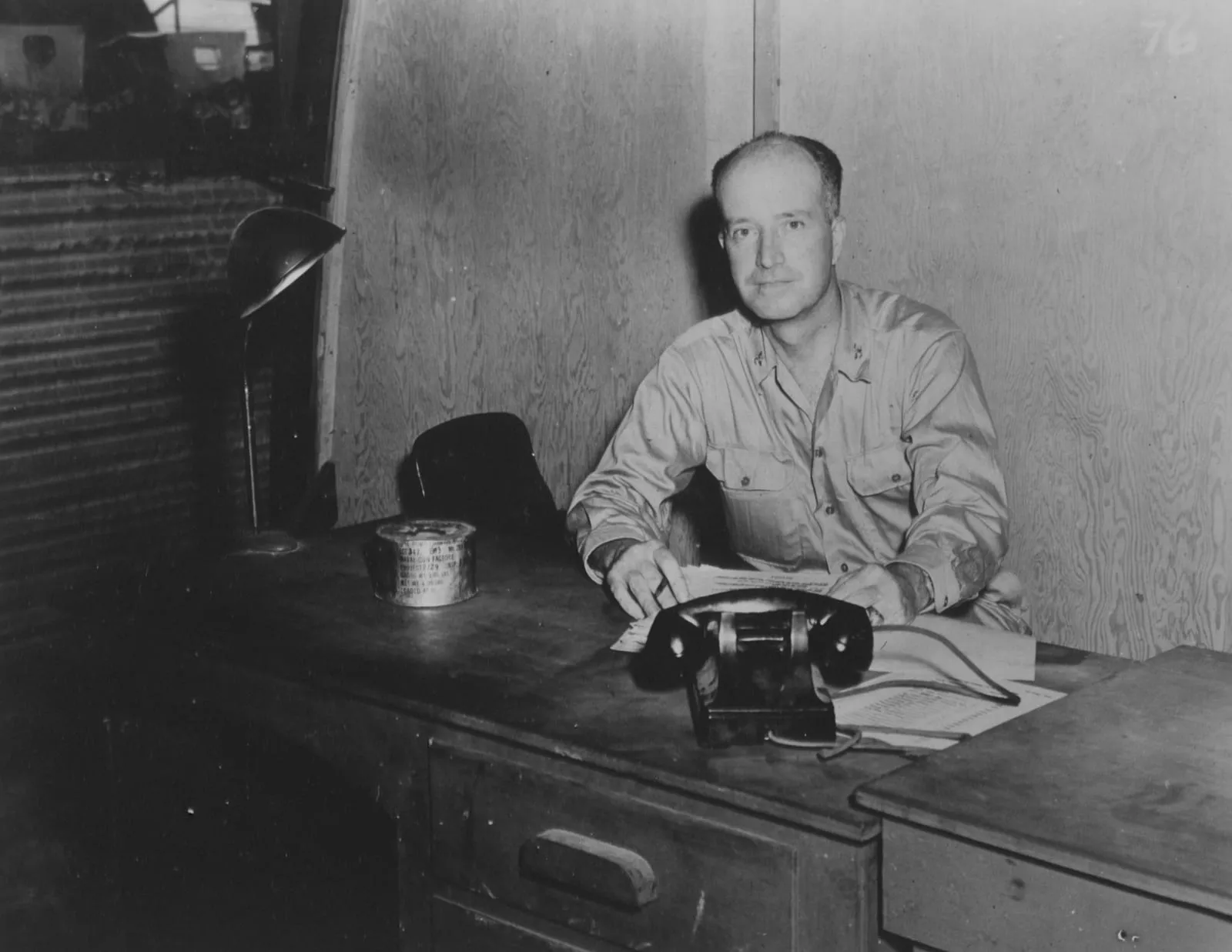
Enola Gay, 6 August
Twelve men flew in Enola Gay: nine aircrew and three specialists, Parsons, Jeppson and Beser. Tibbets flew as pilot, and Robert Lewis, the crew’s usual commander, as his co-pilot. Sources: 1 2 3
-
Pilot and aircraft commander
Paul W. Tibbets Jr.
Colonel 1915 to 2007
Commander of the 509th Composite Group
- Seat
- Flight deck
- Later
- Retired from the Air Force as a brigadier general in 1966, then ran an air taxi business in Columbus, Ohio.
-
Co-pilot
Robert A. Lewis
Captain 1917 to 1983
Aircraft commander of Crew B-9, which usually flew Enola Gay
- Later
- Went into the candy business in New Jersey and became a plant manager.
-
Bombardier
Thomas W. Ferebee
Major 1918 to 2000
Group bombardier, 509th
- Seat
- The nose, at the Norden bombsight
- Later
- Stayed in the Air Force and retired as a colonel in 1970.
-
Navigator
Theodore J. “Dutch” Van Kirk
Captain 1921 to 2014
Group navigator, 509th
- Seat
- Flight deck, behind the pilot
- Later
- Worked for DuPont, and was the last of the Enola Gay crew when he died in 2014.
-
Radar countermeasures
Jacob Beser
First Lieutenant
Radar section, 393rd Bombardment Squadron
- Seat
- In the back of the aircraft
- Later
- The only man aboard both strike aircraft.
-
Weaponeer and mission commander
William S. “Deak” Parsons
Captain, US Navy 1901 to 1953
Project Alberta, Los Alamos
- Seat
- Forward, climbing into the bomb bay to load the gun
- Later
- Became a rear admiral, and died of a heart attack at 52.
-
Assistant weaponeer
Morris R. Jeppson
Second Lieutenant 1922 to 2010
1st Ordnance Squadron
- Seat
- Forward, with Parsons in the bomb bay
- Later
- Studied physics at Berkeley and founded companies of his own.
-
Flight engineer
Wyatt E. Duzenbury
Technical Sergeant 1913 to 1992
Crew B-9
-
Assistant flight engineer
Robert H. Shumard
Sergeant
Crew B-9
- Later
- Became sales manager for a plumbing and heating wholesaler in Detroit.
-
Radar operator
Joseph S. Stiborik
Sergeant 1914 to 1984
Crew B-9
- Later
- Worked for the Industrial Generating Company in Rockdale, Texas.
-
Radio operator
Richard H. Nelson
Private First Class 1925 to 2003
Crew B-9
-
Tail gunner
George R. “Bob” Caron
Technical Sergeant 1919 to 1995
Crew B-9
- Seat
- The tail, the only one of the crew with a direct view of the shock wave
- Later
- Took pictures of the cloud from the tail, and in 1995 published Fire of a Thousand Suns.

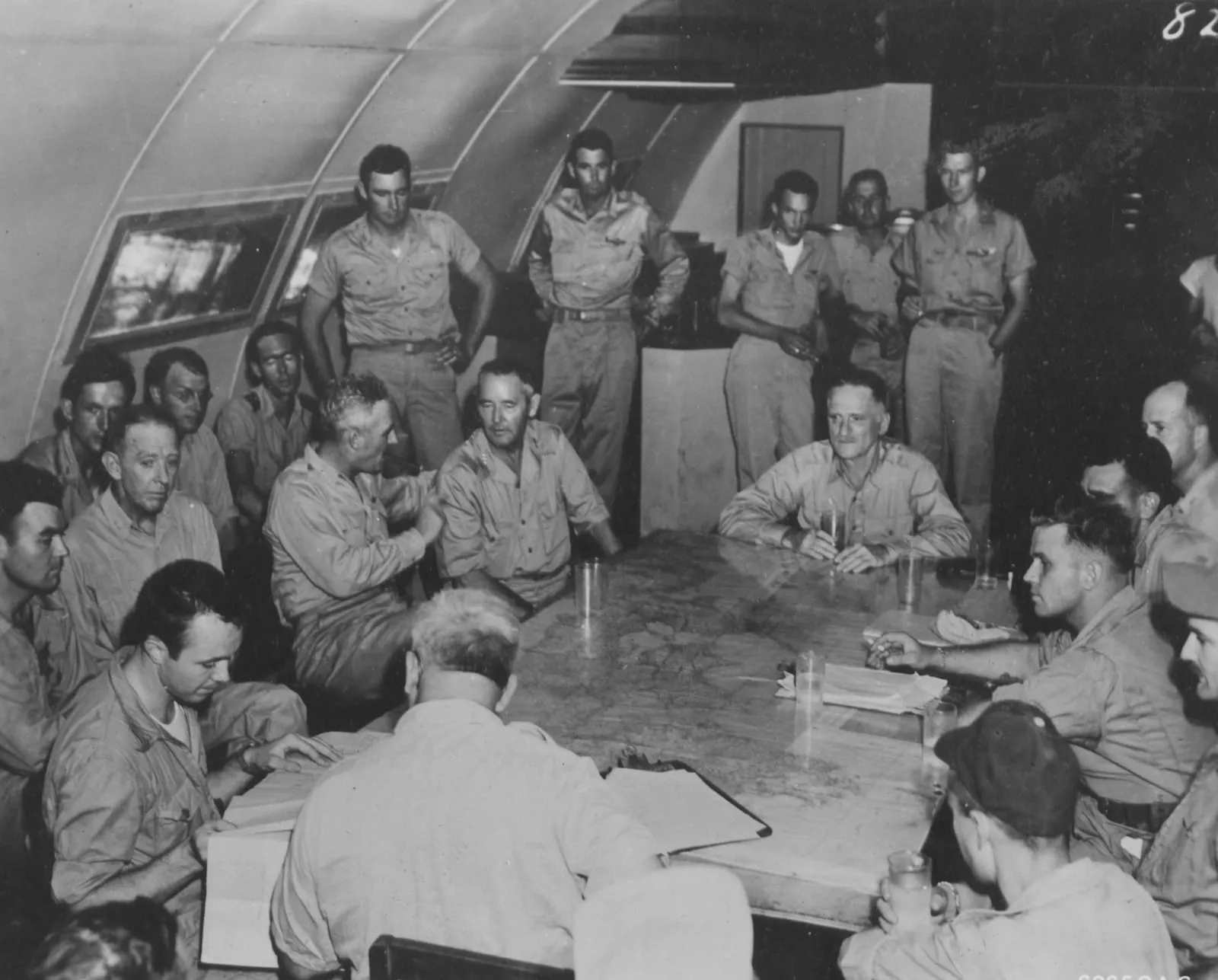
Bockscar, 9 August
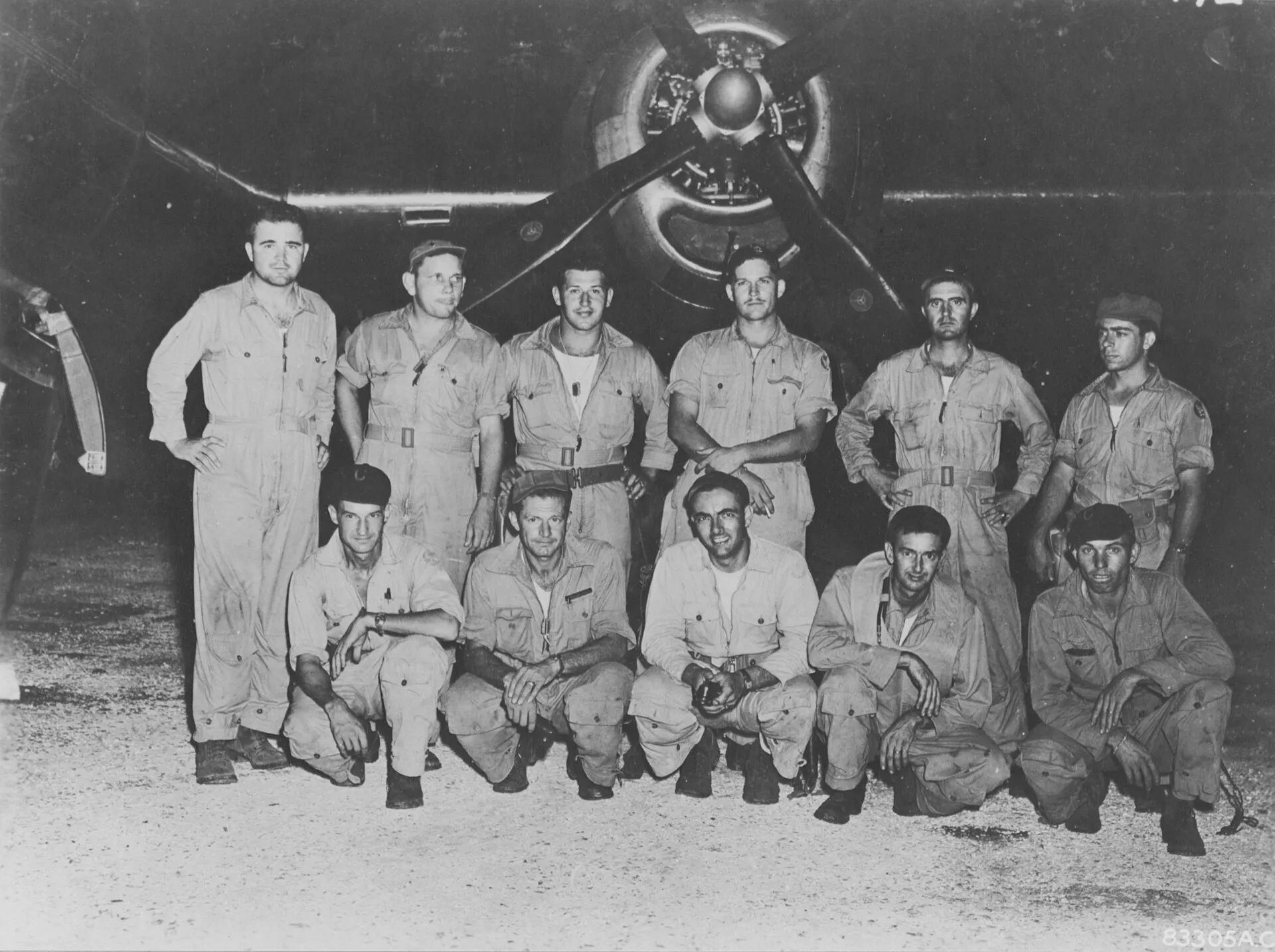
Thirteen men flew in Bockscar. Sweeney’s own crew usually flew The Great Artiste, but it still carried the blast instruments from Hiroshima, so Sweeney and Captain Frederick Bock swapped aircraft rather than move them. Three specialists joined the crew: Ashworth, Barnes and Beser. Sources: 2 4 5 33
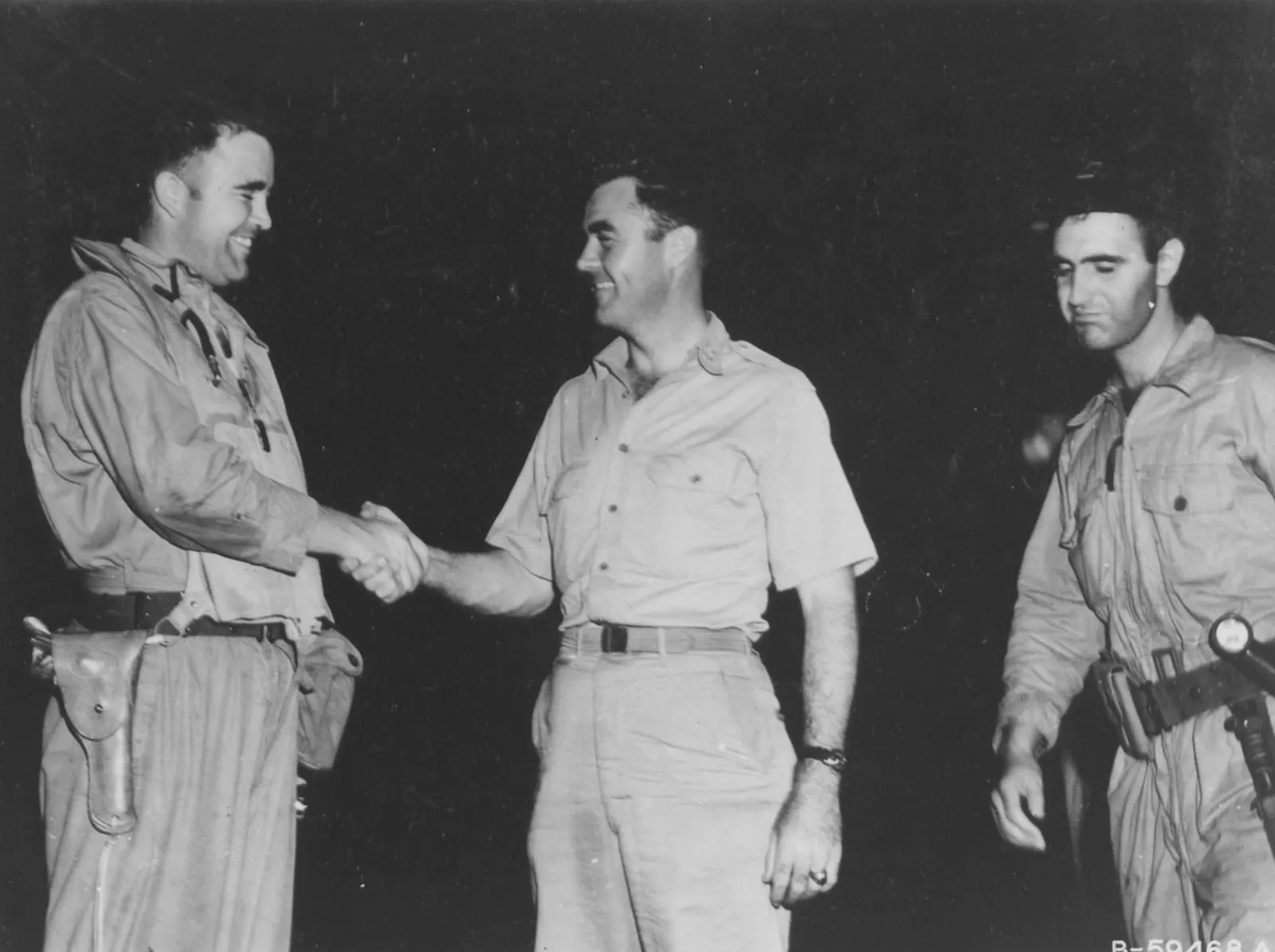
Most of Sweeney’s crew had flown to Hiroshima three days before, in The Great Artiste, so they saw both bombs explode. Jacob Beser alone flew in both strike aircraft. Sources: 2 33 34 35 36 37 38 39 40 41
-
Aircraft commander
Charles W. Sweeney
Major 1919 to 2004
Commander of the 393rd Bombardment Squadron and of Crew C-15
- Later
- Commanded the Massachusetts Air National Guard and retired as a major general.
-
Co-pilot
Charles D. “Don” Albury
Captain 1920 to 2009
Crew C-15
- Later
- Flew to Hiroshima too, in The Great Artiste. Later a captain with Eastern Airlines.
-
Third pilot
Fred J. Olivi
Second Lieutenant 1922 to 2004
Crew C-15
- Later
- Managed bridge operations for the city of Chicago until 1988.
-
Navigator
James F. Van Pelt Jr.
Captain 1918 to 1994
Crew C-15
- Later
- Flew to Hiroshima too, as navigator of The Great Artiste. Stayed in the Air Force and retired as a colonel.
-
Bombardier
Kermit K. Beahan
Captain 1918 to 1989
Crew C-15
- Seat
- At the Norden bombsight
- Later
- Dropped the bomb on his 27th birthday, and later spoke for the abolition of atomic weapons.
-
Flight engineer
John D. Kuharek
Master Sergeant 1914 to 2001
Crew C-15
- Later
- Flew to Hiroshima too, in The Great Artiste. Stayed in the Air Force, and is buried at Arlington.
-
Assistant flight engineer and scanner
Raymond G. Gallagher
Staff Sergeant
Crew C-15
- Later
- Flew to Hiroshima too, in The Great Artiste.
-
Radar operator
Edward K. Buckley
Staff Sergeant
Crew C-15
- Later
- Flew to Hiroshima too, in The Great Artiste.
-
Radio operator
Abe M. Spitzer
Corporal
Crew C-15
- Later
- Saw both bombings, from The Great Artiste and then from Bockscar.
-
Tail gunner
Albert T. “Pappy” DeHart
Sergeant
Crew C-15
- Later
- Flew to Hiroshima too, in The Great Artiste.
-
Radar countermeasures
Jacob Beser
First Lieutenant
Radar section, 393rd Bombardment Squadron
- Later
- Flew on Enola Gay three days before.
-
Weaponeer
Frederick L. Ashworth
Commander, US Navy 1912 to 2005
Project Alberta, Los Alamos
- Seat
- Forward, by the hatch to the bomb bay
- Later
- Rose to vice admiral and commanded the Sixth Fleet.
-
Assistant weaponeer
Philip M. Barnes
Lieutenant 1917 to 1998
1st Ordnance Squadron
- Later
- Worked for DuPont as an engineer and manager for 28 years.

The other aircraft
The strike aircraft never flew alone. Weather aircraft went ahead, one to each possible target. An instrument aircraft and a camera aircraft flew alongside, and a spare waited on Iwo Jima. Sources: 2 55
| 6 August aircraft | Job | Commander |
|---|---|---|
| Straight Flush | Weather, Hiroshima | Capt. Claude Eatherly |
| Jabit III | Weather, Kokura | Capt. John A. Wilson |
| Full House | Weather, Nagasaki | Capt. Ralph R. Taylor Jr. |
| The Great Artiste | Blast instruments | Maj. Charles W. Sweeney |
| Necessary Evil | Cameras | Capt. George W. Marquardt |
| Big Stink | Spare, on Iwo Jima | Charles F. McKnight |
| 9 August aircraft | Job | Commander |
|---|---|---|
| Enola Gay | Weather, Kokura | Capt. George W. Marquardt |
| Laggin’ Dragon | Weather, Nagasaki | Charles F. McKnight |
| The Great Artiste | Blast instruments | Capt. Frederick C. Bock |
| Big Stink | Cameras | Maj. James I. Hopkins Jr. |
| Full House | Spare, on Iwo Jima | Capt. Ralph R. Taylor Jr. |
The commanders are as the Atomic Heritage Foundation’s checked crew list gives them. Marquardt, McKnight and Taylor flew on both missions. Sources: 2 4 33 55
On 9 August the camera aircraft, Big Stink, missed the meeting point over the island of Yakushima: its pilot, James Hopkins, was circling 9,000 feet higher than planned. Sweeney circled for about 45 minutes before going on without it. Sources: 4 7 41 55
Scientists, a reporter and two British observers
Over Hiroshima, The Great Artiste carried three Los Alamos physicists, Luis Alvarez, Harold Agnew and Lawrence Johnston, who dropped gauges to measure the blast. Bernard Waldman flew in Necessary Evil to film the explosion, but his film could not be developed properly because of the humidity on Tinian. Sources: 2 56 57 58
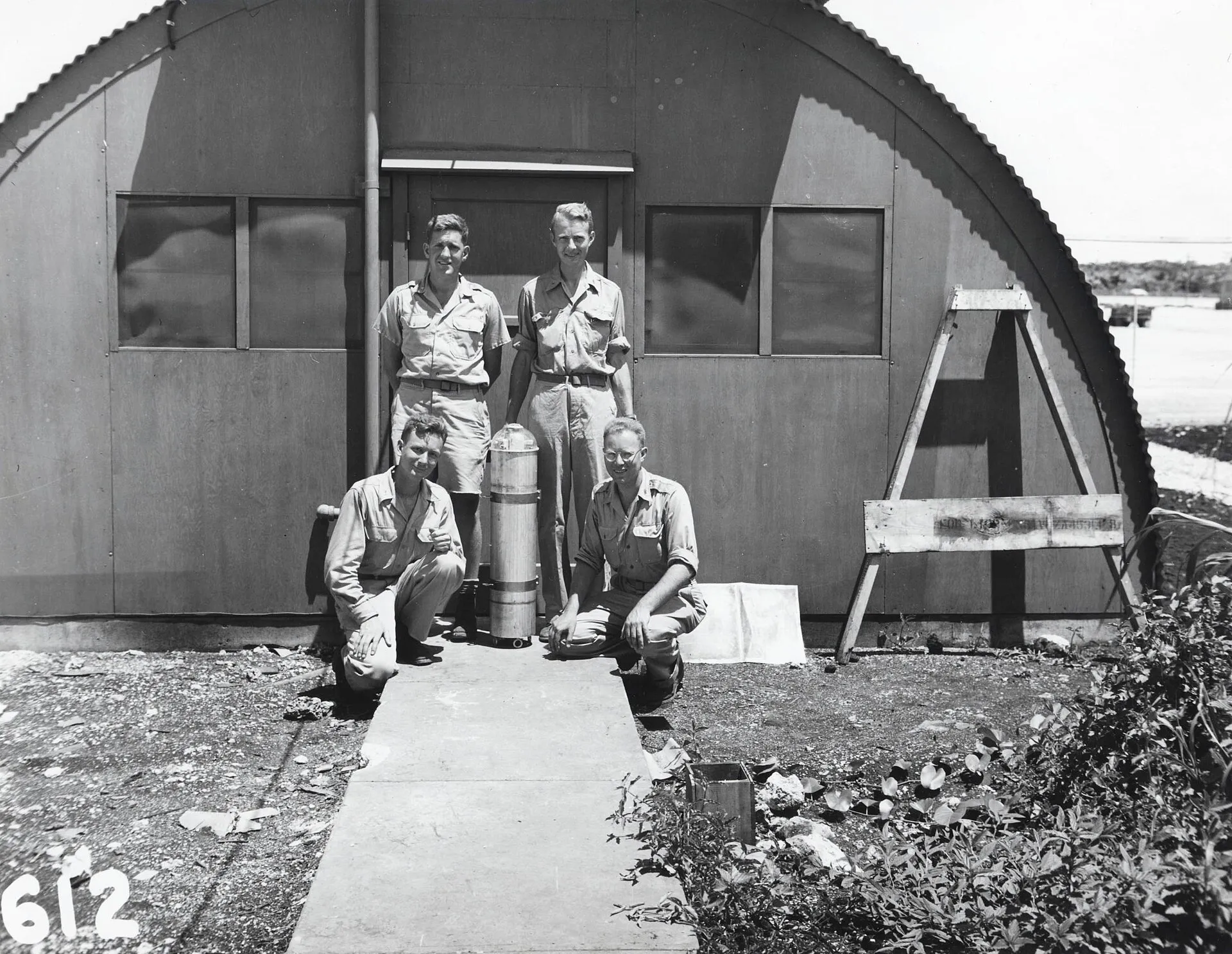

On 9 August Johnston flew in The Great Artiste again. He is believed to have seen all three of the 1945 explosions from the air. With him was William Laurence of the New York Times, whose account of the mission won a Pulitzer Prize. Laurence wrote, wrongly, that The Great Artiste carried the bomb. Sources: 55 59 60 61 62
Two British observers flew in Big Stink: Group Captain Leonard Cheshire, a bomber pilot who had won the Victoria Cross, and the physicist William Penney, who had advised on the height at which the bombs should burst. Cheshire watched from about 50 miles away, and remembered the cloud’s “perfect and faultless symmetry”. Sources: 2 63 64 65
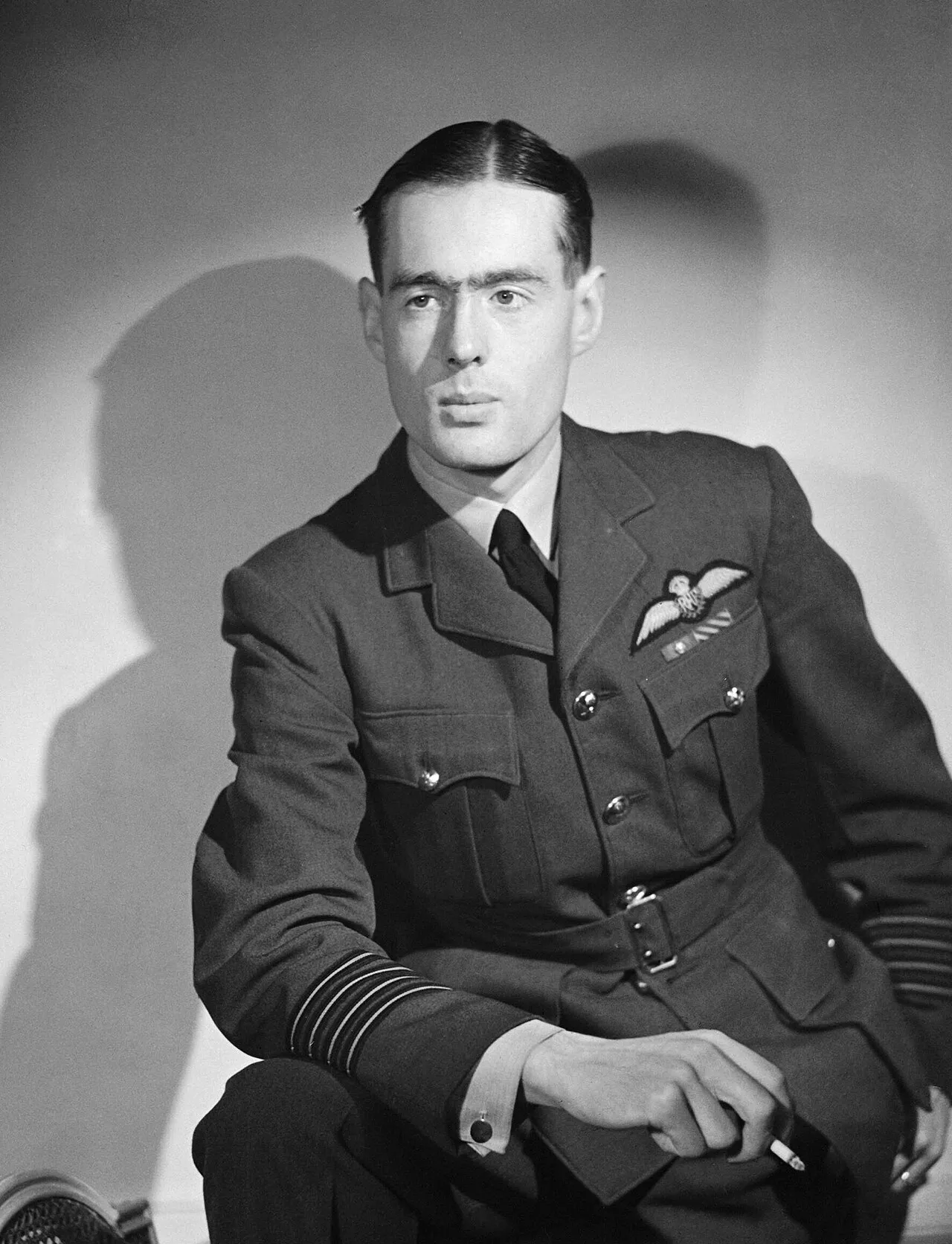

After the war, Cheshire took a dying man into his home in 1948, the beginning of the charity that still carries his name. Penney led the building of Britain’s own bomb, first tested in October 1952. Sources: 63 65 66
The rest of the 509th
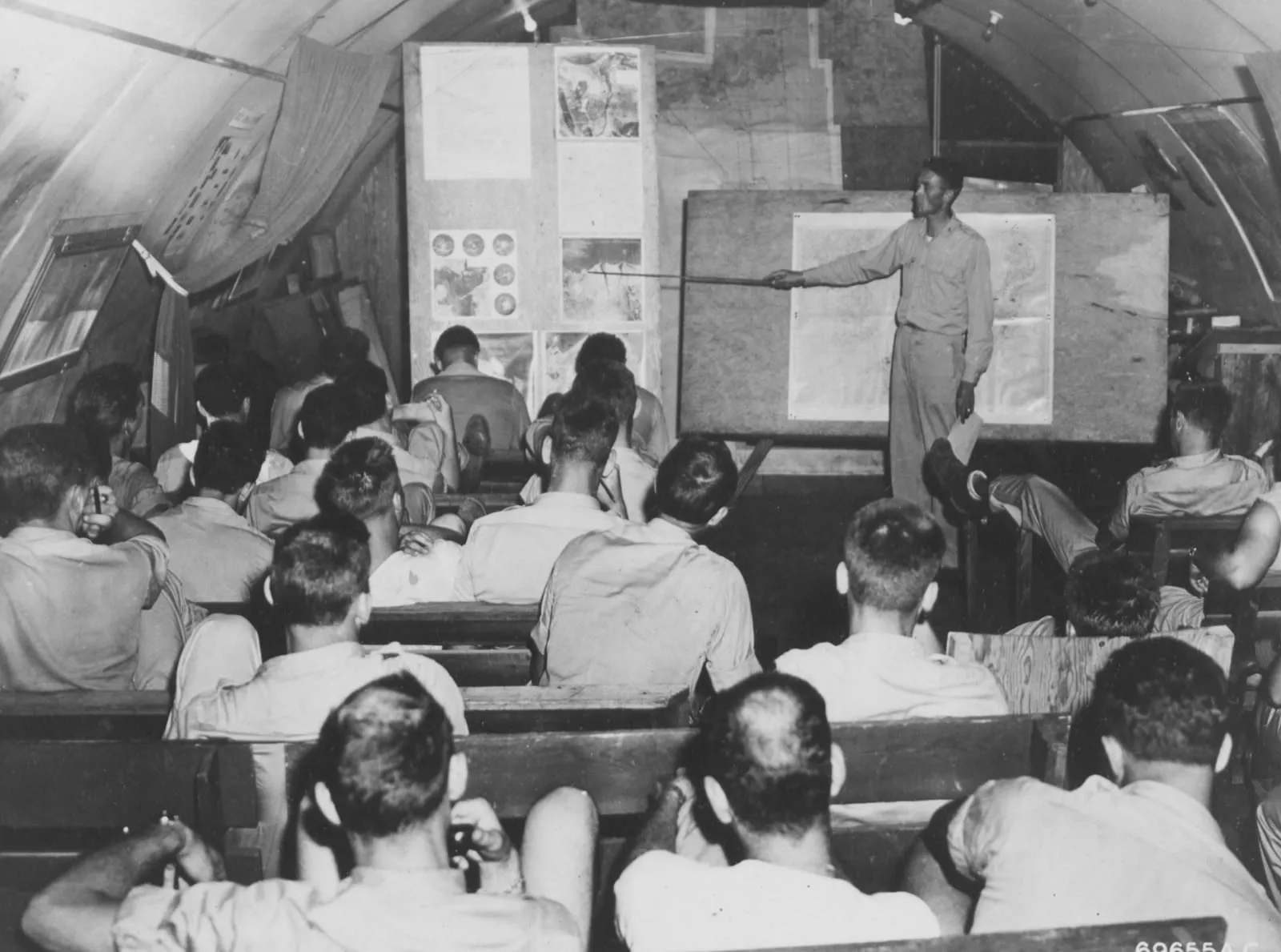
Behind the crews stood a group of 225 officers and 1,542 enlisted men, built to need nobody else. It had its own engineers to repair the B-29s in the field, its own military police, an ordnance squadron for the bombs, and five C-54 transports, the Green Hornet Line, to fly in people and parts. Sources: 7 67
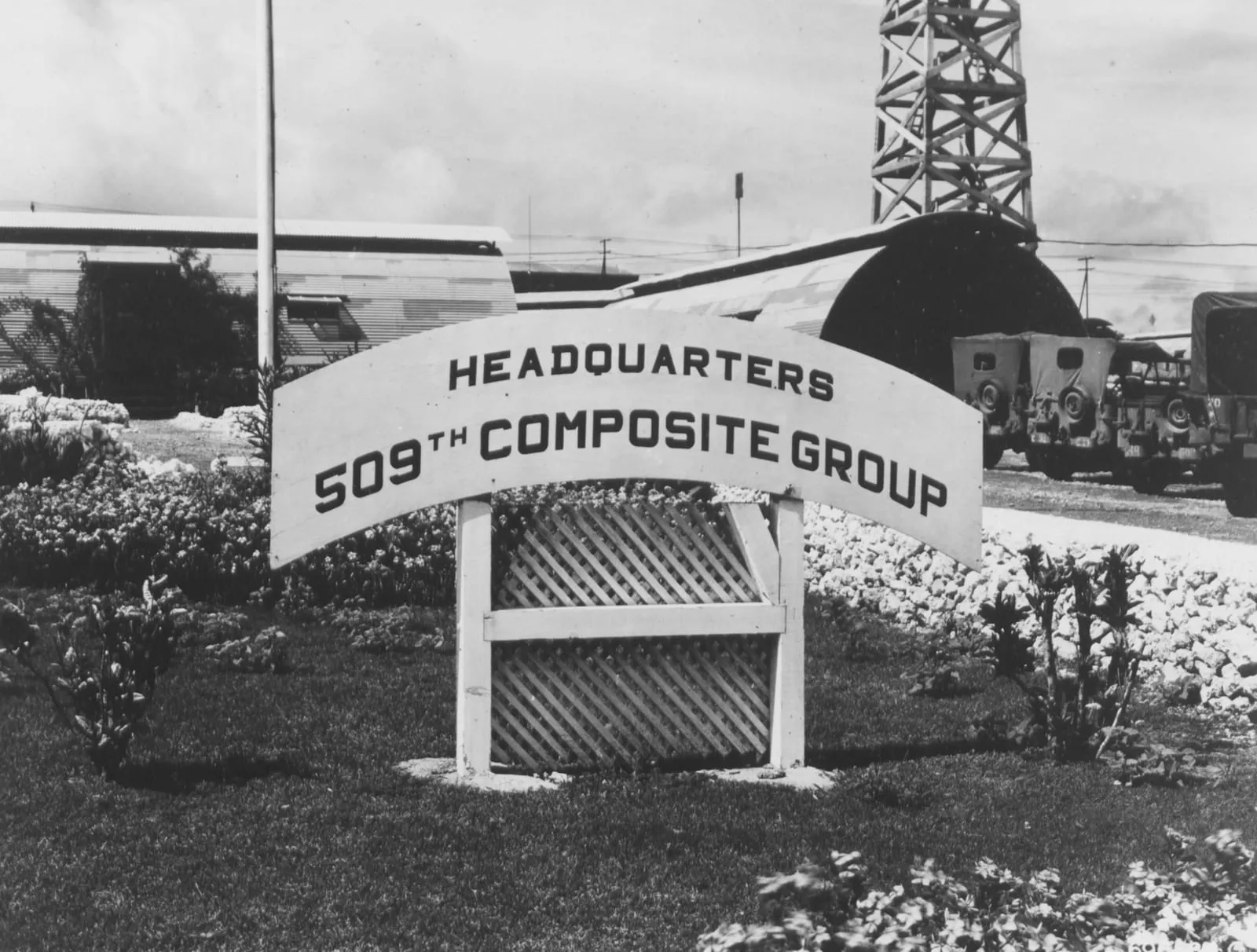
At Wendover, signs told the men: “What you see here, What you do here, What you hear here, Stays here.” Mail and phone calls were monitored, and even men of the 509th did not know the purpose of their training. Sources: 6 68
Tibbets did not count a crew ready for combat until it had made 50 practice drops. On Tinian, single aircraft flew to Japan with pumpkin bombs, the same shape as Fat Man but filled with ordinary explosive. Sources: 6 7 69
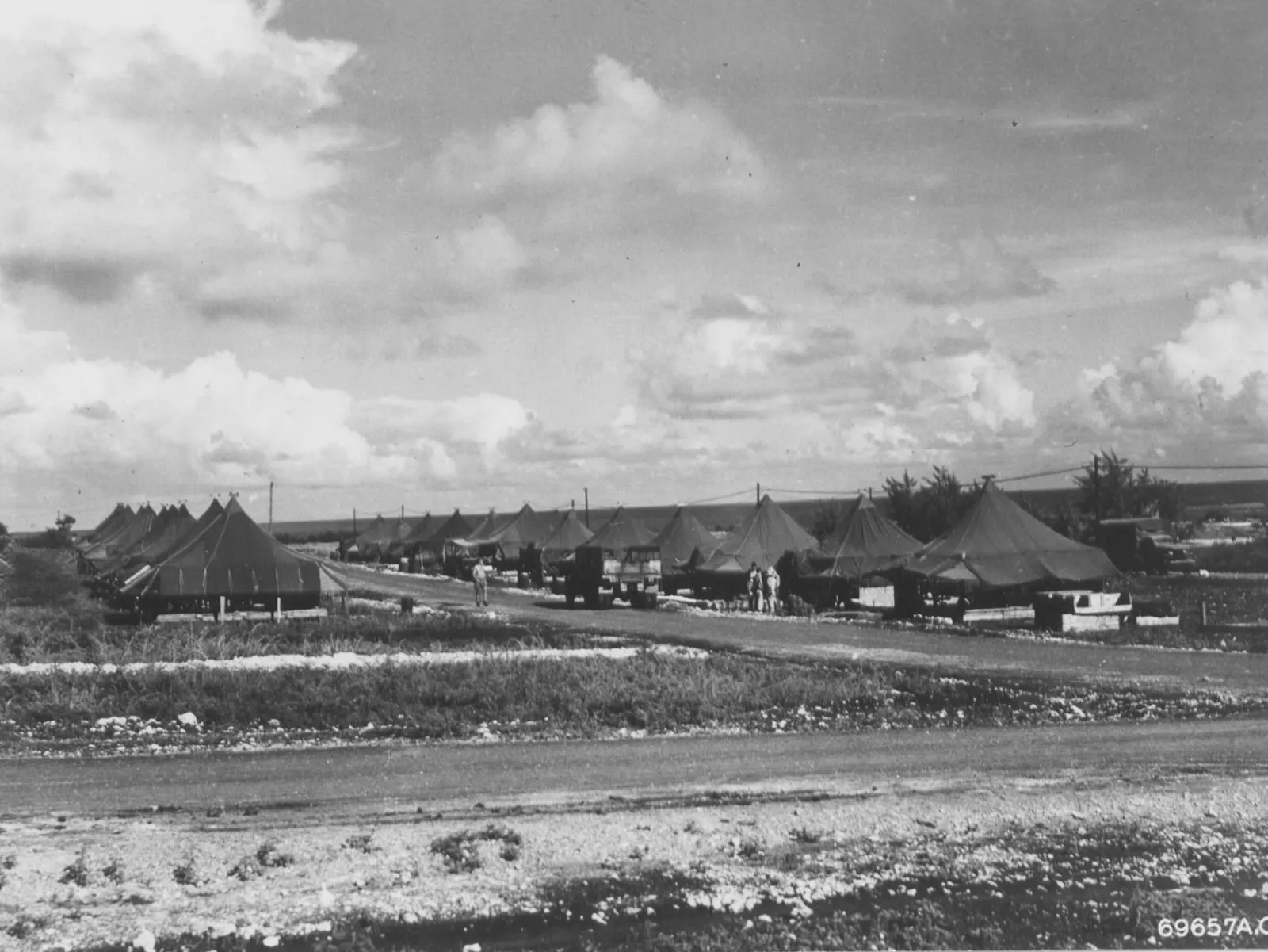
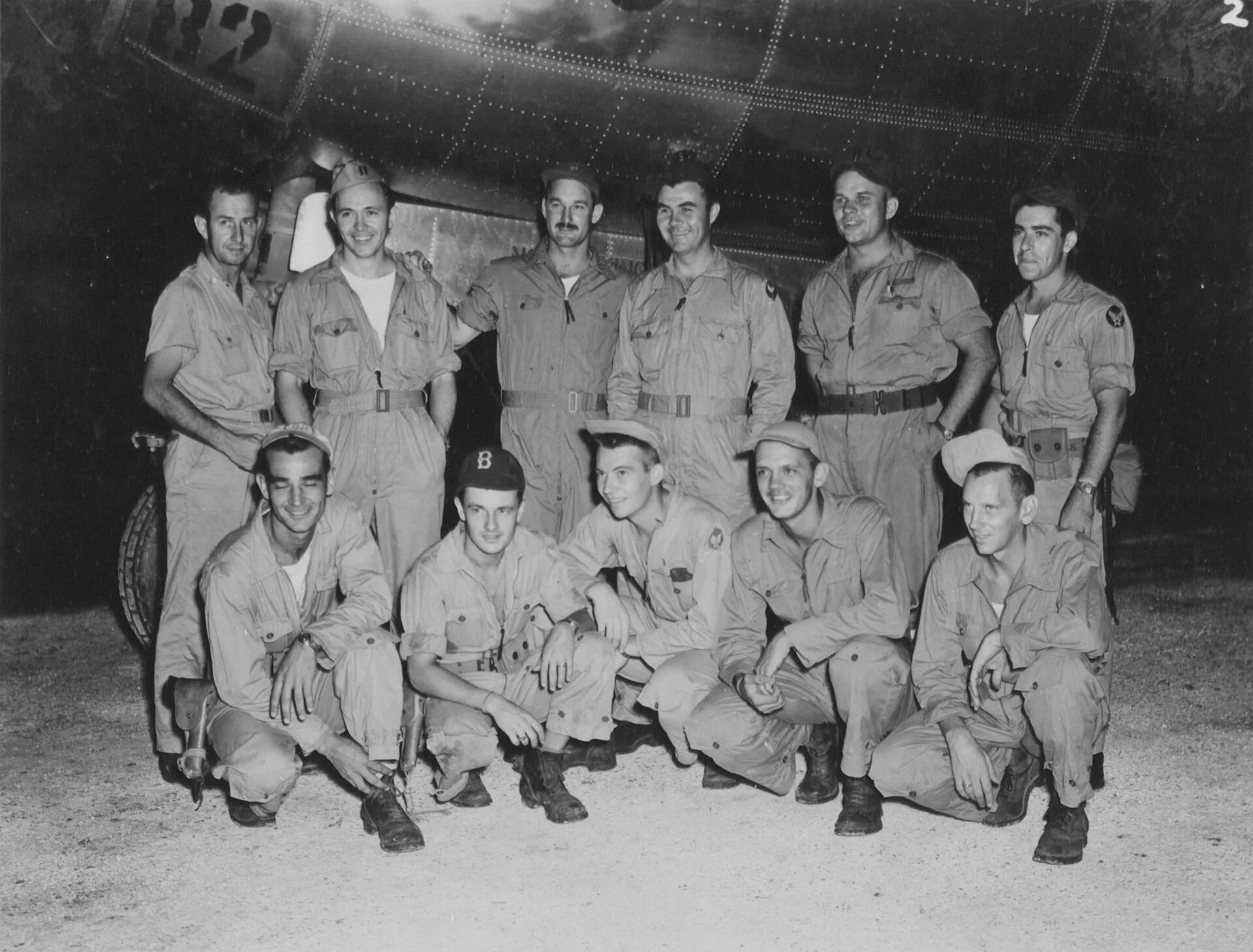
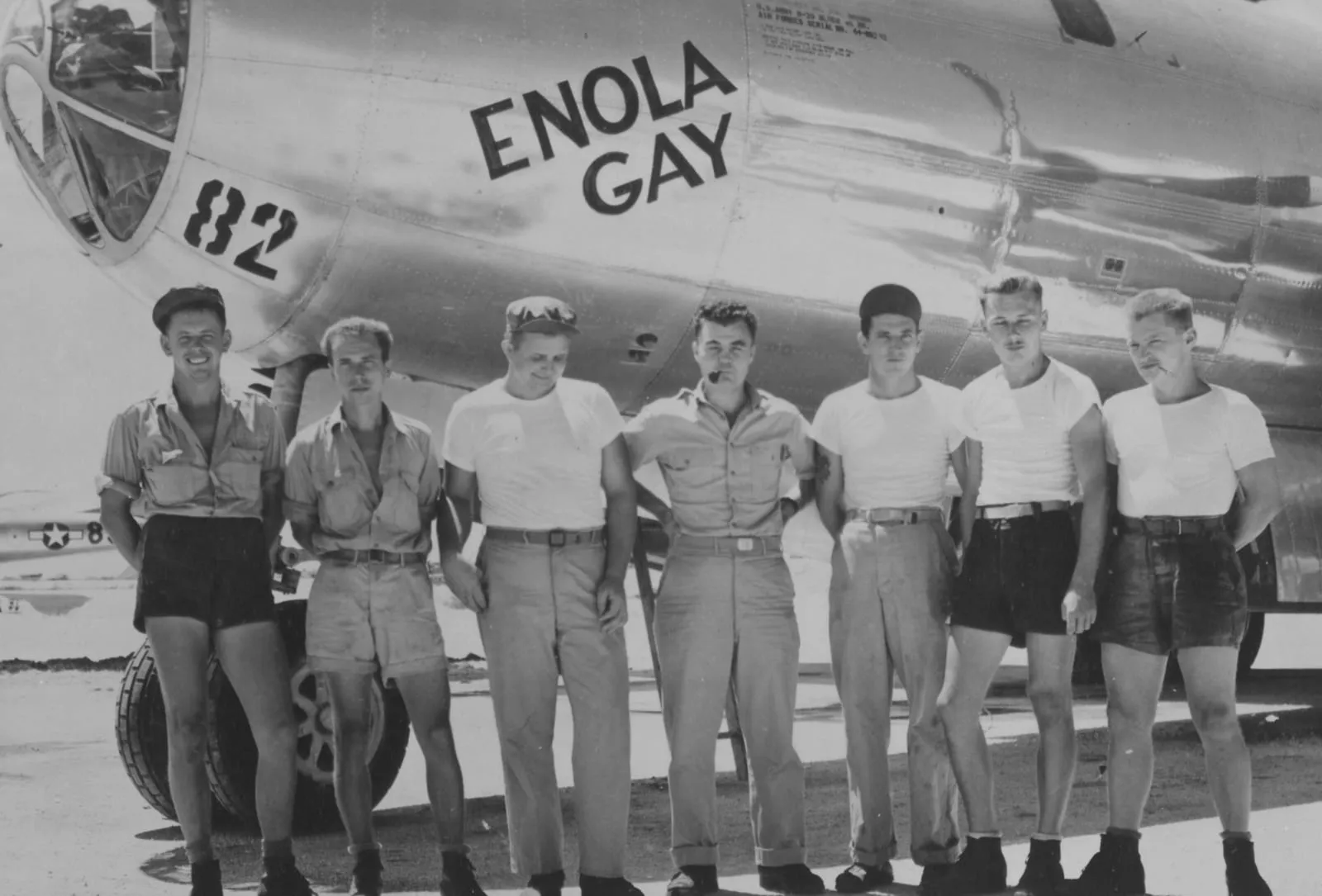
Few of the men who kept the aircraft flying are named in the records. One who is named is Lieutenant Colonel John Porter, Enola Gay’s ground maintenance officer, who stands at the left of the photograph of its crew above. Sources: 70
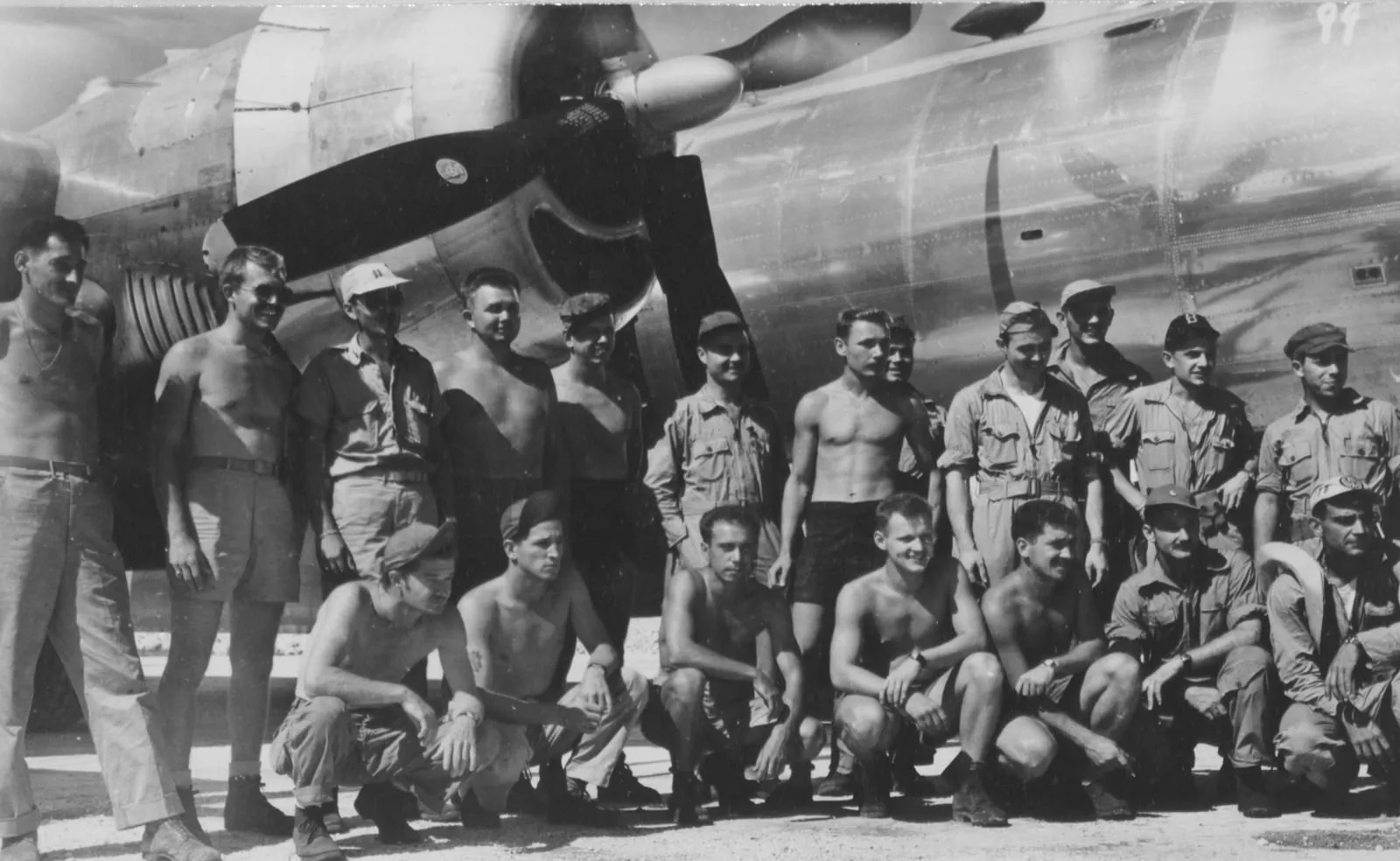
Other units on Tinian mocked the secretive newcomers in a poem, “Nobody Knows”, which ended each verse by saying that the 509th was winning the war. Sources: 7 71
After the war
The group sailed from Tinian on 17 October 1945 for Roswell, New Mexico, and in 1946 took part in the atomic tests at Bikini. It became part of Strategic Air Command. Sources: 7 10 17 72
Many of the men stayed in the Air Force; others went back to civilian jobs, as the cards above show. Paul Tibbets asked for no funeral and no headstone, fearing protests at his grave. Sources: 16
The veterans met every year for decades. Their final reunion was at Wendover in September 2015, with Brigadier General Paul Tibbets IV, the pilot’s grandson, then commanding the 509th Bomb Wing. Sources: 8 9 10
The wing flies the B-2 stealth bomber from Whiteman Air Force Base in Missouri. Its first B-2 arrived on 17 December 1993, 49 years to the day after the 509th Composite Group was activated. Sources: 10 72
The last of the Enola Gay crew, Theodore Van Kirk, died on 28 July 2014. Sources: 21 22